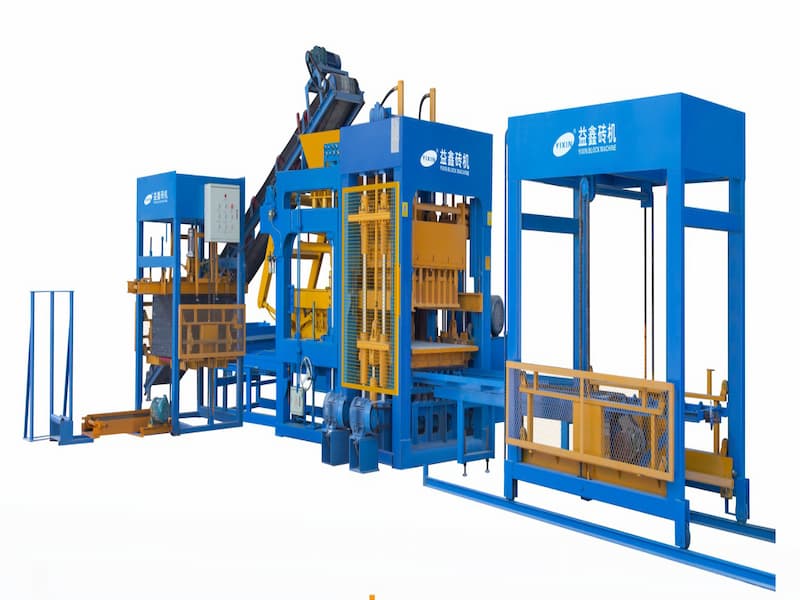
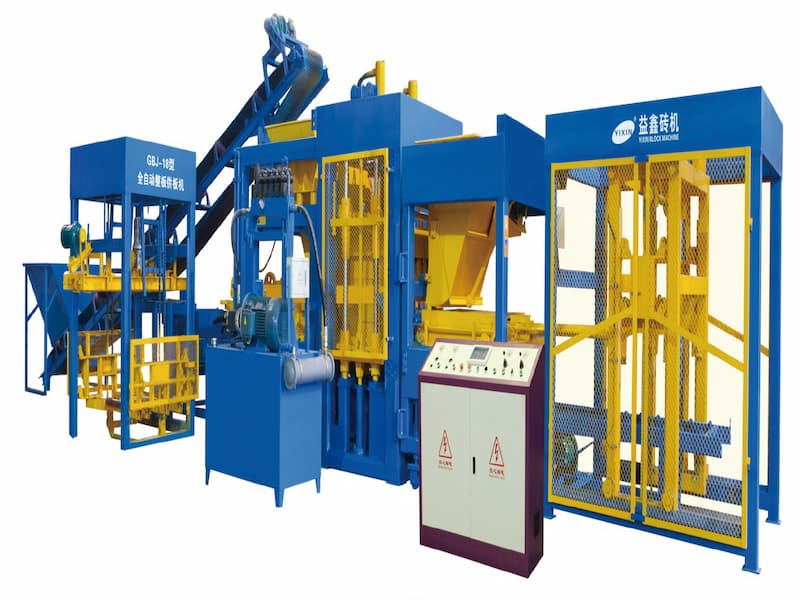
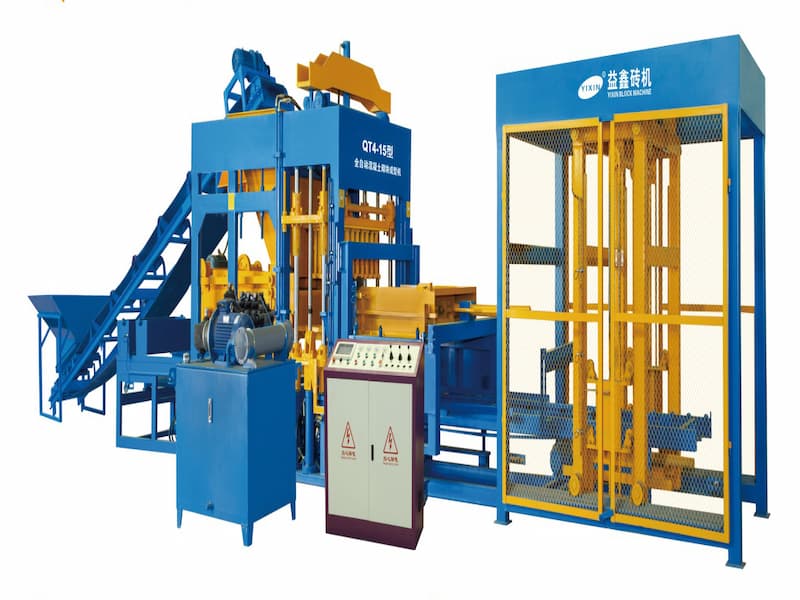
Enter product details (such as color, size, materials etc.) and other specific requirements to receive an accurate quote.
leave a message
If you are interested in our products and want to know more details,please leave a message here,we will reply you as soon as we can.
Submit
Automatic Concrete Block Making Machine Manufacturer Since 2006

Blog

Home Blogs

Blog

  • Slope-Protection Brick and Machinery Production: A Systematic Approach From Product Design to Equipment Configuration
    Slope-Protection Brick and Machinery Production: A Systematic Approach From Product Design to Equipment Configuration
    Oct 23, 2026
    As a vital construction material for water conservancy, transportation, and municipal engineering—balancing structural safety with ecological restoration—eco-friendly slope protection blocks are undergoing a transformation. Driven by "zero-waste city" initiatives and green construction policies, the industry is shifting from traditional precast components toward high-performance, customized products that utilize solid waste as a resource. This transition places higher demands on the upstream manufacturing equipment: machinery must not only meet standardized benchmarks for strength and durability but also offer the flexibility for customization to accommodate specific block shapes, raw materials, and production capacity requirements tailored to diverse engineering scenarios. This article examines the technical specifications for eco-friendly slope protection blocks and explores the key aspects and selection logic for the custom production of the equipment used to manufacture them.    I. Technical Specifications and Engineering Requirements for Eco-Friendly Slope Protection Blocks Eco-friendly slope protection blocks are not a monolithic product category; they encompass various forms—such as interlocking blocks, hexagonal grid blocks, permeable grass-paver blocks, and articulated (hinged) blocks—widely used in riverbank stabilization, embankment protection, roadside slope reinforcement, and coastal engineering. At the industry standard level, the building materials standard JC/T 2094—2021 provides a systematic framework for concrete blocks used in eco-friendly slope protection and dry-stacked retaining walls, covering terminology, classification, technical requirements, and testing methods applicable to water conservancy, transportation, municipal works, and landscaping. Furthermore, specific regional standards exist—such as those issued in Guangdong Province for machine-pressed eco-friendly slope protection blocks—which provide detailed requirements regarding raw materials, technical specifications, and inspection protocols.   In terms of performance, the core requirements for eco-friendly slope protection blocks center on three dimensions: compressive strength, permeability, and ecological compatibility. In practical engineering applications, for instance, blocks manufactured using steel slag or tailings (with an inclusion rate of up to 70%) can achieve a compressive strength of 40 MPa—significantly exceeding the standards for conventional slope protection blocks. Simultaneously, their unique structural design facilitates rapid rainwater infiltration, thereby reducing surface runoff, while the surface of the blocks is engineered to support plant growth, fostering vegetation restoration. Furthermore, the void ratio of porous structural bricks should ideally exceed 33% to meet requirements for vegetation growth and energy dissipation. These specifications directly dictate the configuration of brick-making machinery, including molding pressure, vibration parameters, and mold design.    II. Core Dimensions of Customized Brick-Making Machinery Production The diversity of eco-friendly slope-protection bricks means that a single, standardized machine model cannot serve all purposes. Customized production must focus on three key dimensions: raw material compatibility, brick-type versatility, and production capacity alignment.   Raw material compatibility is the prerequisite for customization. Eco-friendly slope-protection bricks utilize a wide range of raw materials, including cement, stone powder, fly ash, furnace slag, mine tailings, steel slag, and construction waste. These materials vary significantly in terms of particle size distribution, moisture content, and cementitious properties, which directly influences the choice of molding process. For instance, while conventional vibrating brick machines often struggle to process fine-grained solid waste (such as steel slag powder or fine mine tailings), equipment utilizing high-pressure vibration-compaction technology can effectively increase the proportion of such fine materials, facilitating the resource utilization of large volumes of industrial solid waste. In providing customized solutions, manufacturers must adjust process parameters based on the specific characteristics of the client’s raw materials, implementing targeted modifications to the mixing, material-feeding, and pressing systems when necessary.   Brick-type versatility relies on the flexibility of the molds and the molding system. Eco-friendly slope-protection bricks come in a wide range of specifications—from common hexagonal grid bricks (with a side length of 300 mm and a height of 600 mm) to interlocking grass-paver bricks and "figure-eight" (octagonal-style) bricks—all featuring distinct dimensions and void patterns. Customized brick-making machines typically employ an interchangeable mold design; a single main unit can produce various products—such as slope-protection bricks, permeable pavers, grass-paver bricks, standard bricks, and hollow blocks—simply by swapping out the molds. Some advanced models even offer "integrated stone-effect" capabilities, allowing for the production of both PC (precast concrete) stone-mimic products and eco-friendly slope-protection bricks, thereby enhancing the equipment's adaptability to fluctuating market demands.   Production capacity alignment must account for both current requirements and future expansion potential. Small-scale production lines can yield between 10,000 and 60,000 units per day, while large, fully automated lines can exceed 200,000 units. Customized solutions must strike a balance between factory floor space, investment budget, and projected order volumes; a modular design facilitates future line expansion as well as transport and installation. For projects focused on the resource utilization of solid waste, it is also necessary to integrate supporting processes such as raw material pre-treatment, curing kiln systems, and automated palletizing.    III. Selection Logic: Determining Equipment Configuration Based on Product Standards In practice, clients often fall into the trap of selecting equipment before defining the product. A more sound approach is to begin with the standards for the target product and work backward to determine the key equipment parameters. For instance, if the target market involves municipal riverbank stabilization projects—where products must meet the compressive strength and durability requirements of the JC/T 2094—2021 standard—the brick-making machine must provide sufficient molding pressure and vibration frequency to ensure the required density of the bricks. If the project is positioned as a demonstration line for the comprehensive utilization of solid waste, the equipment must prioritize compatibility with specific waste materials (such as steel slag or mine tailings) and accommodate high inclusion rates. If the product line needs to cover a variety of brick types to fulfill diverse orders, the ease of mold replacement and the flexibility of the molding system become the primary considerations.   Furthermore, the technical validation phase of a customized service is essential. A reliable equipment supplier will offer prototype trial production before full-scale manufacturing, verifying the feasibility of the process design by testing the strength, density, and other properties of the finished bricks. The integration of remote diagnostics and intelligent control systems provides ongoing support for fault early warning and process optimization during actual production.       -- Conclusion The value of eco-friendly slope-protection bricks lies in the synthesis of structural safety and ecological functionality—a synthesis that is ultimately realized through the precise configuration of brick-making equipment. From interpreting standards and analyzing raw materials to designing brick types and planning production capacity, the essence of customized production lies in translating engineering requirements into the technical specifications of the equipment. For construction materials enterprises entering this sector, selecting an equipment partner with expertise in solid waste processing, mold development, and process optimization support is far more significant in the long run than merely comparing equipment price quotes. Driven by policies that promote green construction and resource recycling, the synergistic evolution of eco-friendly slope-protection bricks and customized brick-making machinery is forging a replicable technical pathway for both the valorization of solid waste and the ecological transformation of infrastructure.
    Read More
  • Rapid Mold Change and Low-Noise Vibration: Core Technologies for Flexible Production of Specialty Concrete Bricks
    Oct 16, 2026
    The market for specialty (non-standard) concrete bricks is experiencing a quiet surge. From imitation-stone curbs and permeable landscape pavers to hydraulic slope-protection units and custom decorative blocks, the demand for a diverse range of brick shapes has never been more urgent. Yet, traditional brick-making machines struggle to meet this need: mold changes can take hours, vibration-induced noise remains persistently high, and achieving consistent molding precision is difficult. The bottleneck for flexible production lies not in the materials, but in the equipment itself.   Rapid Mold Change: Ensuring "High Variety" No Longer Means "Low Efficiency." The primary challenge in producing specialty bricks is the mold-change process. In conventional machines, changing a mold requires dismantling vibration motors and manually handling heavy mold frames—a labor-intensive, time-consuming task that often results in the loss of half a day’s production capacity. A key breakthrough in rapid mold-change technology involves decoupling the mold from the vibration source. One patented solution, for instance, secures the mold box between a support plate and a pressure plate using a connecting assembly; to swap molds, an air bladder is simply deflated, releasing the mold box without the need to remove vibration motors—drastically reducing downtime. Another patented system for producing multi-layered (faced) bricks utilizes an automated mold-transfer mechanism. Through a combination of a transport assembly and positioning pins, the mold is automatically moved out of the main machine, eliminating the need for manual handling. By transforming mold changes from "heavy manual labor" into a simple "push-button" operation, the batch production of diverse brick types finally becomes economically viable.   Low-Noise Vibration: Not Just a Comfort Feature, but a Prerequisite for Precision. In traditional brick-making machines, vibration-induced noise is often dismissed as a "necessary evil." However, a closer analysis reveals that noise is, in essence, a form of energy loss. In conventional designs, the vibration must travel through multiple components—such as support plates and mold frames—before reaching the material. A significant amount of energy is dissipated during this transmission; to ensure proper compaction, operators are forced to increase both the frequency and duration of the vibration, which in turn causes noise levels to soar. The approach behind low-noise vibration technology addresses the root of the issue: the vibration mechanism is rigidly attached to the bottom of the concrete brick mold frame via connectors, allowing vibrational force to be applied directly to the mold frame without any intermediate components. This shortens the energy transfer path and significantly reduces energy loss, enabling the system to achieve the same level of compaction without requiring high-frequency operation. Simultaneously, the integration of a vibration-damping and amplitude-limiting mechanism keeps the amplitude of the vibrating base plate within a controlled range, preventing the impact-related noise that would otherwise result from excessive amplitude. Consequently, noise levels are reduced while vibration efficiency actually improves—shortening compaction time, accelerating the molding cycle, and ensuring more uniform product density.   The essence of flexible production lies in achieving both precision and efficiency. While rapid mold-changing technology addresses the question of "whether a change is possible," low-noise vibration technology addresses the question of "how well that change performs." Complex, non-standard brick shapes demand far greater uniformity in material distribution and consistency in compaction compared to standard bricks. If vibrational energy is not applied precisely to the mold frame, corners and edges are highly susceptible to insufficient material filling or inadequate compaction. By applying vibration directly and controlling its amplitude through damping and limiting mechanisms, the deviation in amplitude across different points on the mold frame is effectively constrained, ensuring the structural integrity of edges and corners as well as high dimensional accuracy for complex brick shapes. Meanwhile, the rapid mold-changing system—utilizing precision positioning designs, such as the interaction between locating pins and holes, along with fine-tuning mechanisms for mold clamping pressure—ensures that the mold is reset with high precision after every change. Together, these technologies allow a single piece of equipment to transition rapidly between different brick types while maintaining consistent product quality.           Looking at industry trends, the focus of competition among concrete brick machine manufacturers is shifting from "single-machine production capacity" to "flexible production capability." Downstream customers are no longer satisfied with a machine that produces only one type of brick; instead, they require production lines capable of flexibly handling a diverse product mix and smaller batch orders. The maturation and widespread adoption of rapid mold-changing and low-noise vibration technologies provide the essential equipment foundation for this transition. When mold changes are no longer a burden, and when vibration no longer comes at the cost of excessive noise, the flexible production of specially shaped bricks truly transitions from concept to the assembly line.For more product details, please visit https://www.yxbrickequipment.com
    Read More
  • Temperature Adaptation in Concrete Brick Production: Balancing Efficiency and Quality
    Oct 13, 2026
    The production efficiency of concrete brick machines is heavily dependent on environmental conditions; low and high-temperature operating environments present distinct technical challenges regarding equipment performance and brick molding. Adopting an environmental adaptation perspective, this paper systematically analyzes the core conflicts faced by concrete brick machines in these environments and proposes a balancing strategy anchored in three pillars: dynamic adjustment of process parameters, specialized equipment protection, and optimization of curing protocols. The central argument is that production efficiency and brick quality need not be a zero-sum game; precise environmental compensation strategies can ensure product strength and aesthetic quality while maintaining reasonable production output. In low-temperature environments, the balancing focus lies in heat management and ensuring proper hydration, whereas in high-temperature environments, the focus shifts to moisture control and the mitigation of thermal stress. The guiding principle for both scenarios is "proactive adjustment" rather than "reactive response."   I. Introduction The production of concrete blocks and paving stones is essentially a coupled process involving cement hydration reactions and mechanical molding. This coupling is highly sensitive to ambient temperature and humidity; when temperatures deviate from the optimal range, changes occur in hydration rates, mixture workability, demolding quality, and even the stability of the equipment's hydraulic and lubrication systems.   In industry practice, a common tendency is to "trade quality for quantity" or "sacrifice quantity for quality"—either forcing full-load operation in harsh environments, leading to higher defect rates, or drastically slowing down production to the point of inefficiency. Neither strategy addresses the core issue: environmental adaptation is not about compromise, but rather about establishing differentiated process parameters and support systems tailored to specific temperature ranges.   The mechanisms by which low and high temperatures affect brick machine production differ fundamentally. The primary threats in low-temperature environments are water freezing and the stalling of chemical reactions, whereas in high-temperature environments, the main risks are rapid moisture evaporation and damage caused by thermal stress. Consequently, balancing strategies must be designed separately for each temperature range, with specific priorities for each. II. Balancing Strategies for Low-Temperature Environments   2.1 Key Impacts of Low Temperatures on Equipment and Bricks When the ambient temperature drops below 5°C, concrete brick production faces multiple constraints. First, the viscosity of lubricating oil rises sharply as the temperature falls, increasing resistance in moving parts and making startup difficult; in severe cases, this causes sluggish hydraulic system response and unstable molding pressure. Second, the moisture within the mixture is at risk of freezing. Research indicates that when the temperature drops below 4.4°C, free water in the mortar begins to freeze, and the hydration reaction virtually stalls; the voids left by frozen water after thawing permanently weaken the brick's structural integrity.   Regarding brick quality, the most insidious risks of low-temperature production are "false set" and "frost damage"—where the green brick freezes before gaining sufficient strength, preventing it from ever reaching its design strength, even if curing conditions improve later. Canadian building codes explicitly mandate that when the air temperature is below 5°C, concrete must be maintained at a temperature of at least 10°C for 72 hours after placement.   2.2 Strategies for Adjusting Process Parameters Preheating raw materials and optimizing the mix design are primary measures for low-temperature production. Mixing water should be heated (typically to 40–60°C) to compensate for heat loss absorbed by aggregates and cement. However, care must be taken to keep the water temperature below 60°C, as excessive heat can cause the cement to undergo "false set." Additionally, the use of early-strength agents or antifreeze admixtures can be considered to accelerate early strength development, allowing the bricks to reach critical strength before freezing occurs.   Dynamic adjustment of the molding cycle is equally critical. Low temperatures reduce the mixture's flowability; maintaining a standard molding cycle could result in uneven material distribution or inadequate compaction during vibration. Moderately extending the vibration time or adjusting the vibration frequency can compensate for the loss in workability without significantly sacrificing output. For specialized models in the industry with a standard molding cycle of approximately 25–30 seconds, the cycle can be extended by 2–3 seconds in low-temperature conditions rather than drastically reducing production volume.   2.3 Equipment Protection and Operational Strategies The core strategy at the equipment level involves the coordination of lubrication systems and preheating procedures. In winter, hydraulic oil with good low-temperature fluidity and cold-resistant grease should be used to ensure the hydraulic system can rapidly build pressure during cold starts. The no-load preheating procedure prior to startup must not be skipped: the machine should idle for 3–5 minutes to allow the oil temperature to rise and lubrication to take effect before feeding materials.   Draining the hydraulic cooler to prevent freezing is a detail easily overlooked. If residual water remains in the cooler after operations cease, freezing overnight could cause the piping to burst. Anti-rust measures for molds and moving parts should also be intensified, as low-temperature condensation exacerbates the risk of corrosion on metal surfaces.   2.4 Curing Protocols The key to low-temperature curing is prioritizing both thermal insulation and moisture retention. Finished bricks should not be cured naturally in the open air; instead, they should be placed in insulated sheds or covered with thermal insulation materials, utilizing the heat generated by cement hydration to maintain the curing temperature. Patented technologies demonstrate that a well-designed self-insulating curing system can maintain an internal curing temperature above 30°C even when the ambient temperature is 0°C, thereby significantly shortening the curing cycle.   Curing time must be substantially extended. While initial strength is achieved in 7 days at normal temperatures, it may take over 45 days to achieve the same result in low-temperature conditions. For factories with the necessary capabilities, steam curing or low-pressure steam environments can drastically reduce curing time; however, the rate of temperature rise must be controlled to prevent the bricks from cracking due to thermal stress.   III. Balancing Strategies for High-Temperature Environments 3.1 Key Impacts of High Temperatures on Equipment and Bricks The primary technical challenge in high-temperature environments is the rapid loss of moisture. Stiff-consistency concrete has limited inherent water content; in environments exceeding 35°C, the mixture begins to lose significant moisture during mixing, conveying, and placement. Rapid surface evaporation leads to rough brick edges and insufficient strength development, potentially resulting in surface micro-cracks in severe cases.   Risks at the equipment level also cannot be ignored. When hydraulic oil temperatures exceed 60°C, viscosity drops and internal leakage increases, making it difficult to maintain stable control over molding pressure. Excessive temperatures inside electrical cabinets can trigger PLC malfunctions or accelerate component aging. Prolonged high-temperature operation also accelerates the degradation of seals and belts.   3.2 Process Parameter Adjustment Strategies Moisture management is central to high-temperature production, yet "adding more water" is a dangerous misconception. While extra water may temporarily improve workability, it leads to issues such as bricks sticking to molds, deformation, and inconsistent heights. The correct strategy is to compensate for evaporation rather than altering the water-cement ratio: shorten the time interval between mixing and molding, provide shading for conveyors, and—when necessary—use misting rather than direct water injection to maintain ambient humidity.   Aggregate management is equally critical. Under high-temperature conditions, the surface temperature of sand and gravel can exceed 50°C; without shading at the aggregate storage yard, the temperature of the mixture entering the mold will be excessively high. Pre-wetting aggregates or storing them under shade can effectively lower the initial temperature of the mixture.   3.3 Equipment Heat Dissipation and Operational Strategies Thermal management of hydraulic systems requires systematic monitoring. Industry-recommended standards dictate that a warning should be issued when hydraulic oil temperatures exceed 60°C, and motor operating temperatures should be kept below 75°C. For brick machines in continuous operation, hydraulic stations must be equipped with effective cooling systems, and radiators should be inspected regularly for dust-related blockages.   Protection of electrical cabinets is crucial. The combination of high temperatures and dust accelerates electrical failures; therefore, ensure cooling fans operate correctly, keep ventilation vents unobstructed, and regularly remove accumulated dust. In regions with extreme heat, installing industrial air conditioning units for active cooling of electrical cabinets should be considered.   3.4 Curing Protocols The key to curing in high-temperature conditions is preventing premature dehydration. If freshly demolded brick units are exposed directly to sunlight and hot, dry winds, surface moisture can evaporate completely within hours, halting cement hydration due to water deficiency. Research indicates that initial curing of concrete blocks in high-temperature environments should avoid direct sunlight, with the first 24 hours being particularly critical. Effective strategies include establishing shaded curing zones, using moisture-retaining coverings, and installing misting systems in curing areas to maintain humidity. It is important to note that in high-temperature conditions, the curing water itself is often hot; direct spraying could exacerbate temperature fluctuations within the bricks. A safer approach is to allow the green bricks to rest in a cool, shaded area after demolding—letting surface moisture evaporate moderately and the bricks develop initial structural integrity—before commencing moisture-retention curing.   IV. Principles of Comprehensive Balance and Industry Practice 4.1 Proactive Adjustment vs. Reactive Response Whether dealing with low or high temperatures, the core philosophy of environmental adaptation is "proactive intervention." For low-temperature production, tasks such as changing lubricants, deploying thermal insulation, and conducting staff training should be completed before winter sets in. Conversely, high-temperature production requires checking hydraulic heat dissipation, electrical cooling systems, and shading conditions in curing areas before summer arrives. When environmental parameters exceed controllable limits, proactively reducing production capacity—rather than risking full-load operation—is the more economical choice.   4.2 Environmental Adaptability in Equipment Selection From a long-term operational perspective, a machine's ability to adapt to the environment should be a key criterion during selection. For extreme cold, using low-temperature-resistant steel for the vibration table ensures stable output at -40°C; for high-temperature environments, critical parameters to evaluate include the heat dissipation redundancy of the hydraulic system and the electrical protection rating. Global industry experience demonstrates that equipment designed for environmental adaptability maintains stable operation even under harsh conditions.   4.3 The True Relationship Between Quality and Output The ultimate goal of environmental adaptation is to maximize output while adhering to quality constraints under specific environmental conditions—avoiding both a blind obsession with volume and an unrealistic pursuit of perfection. Reducing output by 20% in cold weather to prevent frost damage is far more economical than running at full capacity while seeing the defect rate rise by 40%. Similarly, sacrificing a small amount of cycle time in high temperatures to ensure demolding integrity and dimensional stability is a rational choice.         V. Conclusion Operating concrete brick machines in low- or high-temperature environments is, fundamentally, a process of working in harmony with the laws of physics. In low-temperature conditions, the core challenges are hydration stagnation and the risk of freezing caused by insufficient heat; in high-temperature conditions, the primary issues are moisture loss and the accumulation of thermal stress. While specific mitigation strategies differ for each scenario, they share a common logic: achieving a dynamic optimum between environmental constraints and production goals through the dynamic adjustment of process parameters, specialized equipment protection, and strengthened curing protocols.   Adapting to environmental conditions is not merely a passive constraint on production efficiency but a proactive investment in the robustness of the production system. For brick manufacturing plants operating year-round, the implementation of standardized operating procedures tailored to specific seasons and temperature zones yields returns in the form of reduced defect rates, extended equipment lifespan, and more reliable order fulfillment. To get a custom solution or request a quote, please visit https://www.yxbrickequipment.com
    Read More

  • How to Identify Customer Needs: Matching Block Machines to Project Requirements
    How to Identify Customer Needs: Matching Block Machines to Project Requirements
    Oct 07, 2026
    Quick Answer Matching block machines to project requirements begins with a structured needs assessment covering five critical dimensions: the types of blocks required, the production capacity needed to meet project timelines, the available budget and expected return on investment, the level of automation appropriate for the operating environment, and the site conditions including power supply, space, and raw material availability. A hospital project in a seismic zone, for example, requires blocks capable of accommodating steel reinforcement, while a residential housing development may prioritize high-volume production of standard hollow blocks. Misalignment between machine capability and project needs leads to costly inefficiencies—over-specification wastes capital, while under-specification limits production and compromises quality. This guide provides a practical framework for identifying customer needs and matching them to the right block machine solution.                       1. User Search Intent Analysis Who Is Searching and Why?   Audience Primary Intent Key Concerns Block Machine Manufacturers Commercial/Sales Strategy Understanding customer pain points to propose suitable solutions Distributors/Dealers Commercial/Consultative Helping end-users select the right machine for their projects Contractors Operational/Equipment Selection Matching machine capacity to project scale and timeline Project Consultants Informational/Advisory Developing specifications and equipment recommendations     Key Search Intent Categories   Consultative Selling: Understanding how to ask the right questions to uncover customer needs Technical Matching: Aligning machine specifications with project requirements Budget Optimization: Balancing capability with affordability Application-Specific Guidance: Matching machines to specific project types (housing, infrastructure, commercial)       2. Key User Questions Q: What questions should I ask a customer before recommending a block machine? Begin with the fundamentals: What types of blocks do you need to produce? What is your required daily or monthly production capacity? What is your budget range? What is the level of automation you prefer? What are your site conditions—power supply, available space, and raw materials? What is your timeline for starting production? Understanding these factors enables accurate matching of machine specifications to project requirements.   Q: How do I determine the right production capacity for a project? Calculate required capacity by working backward from project timelines. For example, if a housing project requires 500,000 blocks over 12 months, and production runs 25 days per month, the required daily output is approximately 1,667 blocks. Adding a 20–30% buffer for fluctuations and future growth suggests a machine capable of 2,000–2,200 blocks per day. This ensures the machine meets project demands without excessive over-capitalization.   Q: What role does automation level play in machine selection? Automation level affects labor requirements, production consistency, and initial investment. Fully automatic machines require 3–5 workers and deliver consistent quality but demand higher capital. Semi-automatic machines need 8–12 workers but offer lower entry cost. The choice depends on labor availability and cost in the customer's region, production volume, and quality requirements. In regions with abundant low-cost labor, semi-automatic machines may be more economical.   Q: How do raw materials affect machine selection? Raw material characteristics influence machine configuration and mix design. Fly ash, slag, and recycled aggregates may require different batching systems and mixers. Abrasive materials accelerate mold wear, requiring more durable mold materials. Moisture content affects batching accuracy and may require moisture sensors. Understanding the customer's raw material sources ensures the machine is configured for optimal performance.   Q: What site conditions should be considered? Site conditions include available space, power supply, water access, and foundation requirements. Mobile machines suit remote sites with limited power. Stationary machines require stable foundations and reliable three-phase power. Space constraints may dictate compact machine designs or vertical layouts. All these factors influence machine selection and layout planning.     3. The Needs Assessment Framework Step 1: Product Requirements Begin by understanding what the customer wants to produce. Block types—hollow blocks, solid bricks, pavers, curbstones, interlocking blocks, or specialty products—determine mold requirements and machine configuration. A project requiring multiple product types needs a machine with quick mold change capability. Special requirements, such as steel reinforcement channels for seismic zones, demand customized mold designs.   Step 2: Production Capacity Calculate required capacity based on project timelines and market demand. Consider current needs and future growth. A machine operating at 80–85% of rated capacity is ideal—enough buffer for peak demand without excessive over-specification. Production capacity also affects labor requirements, curing space, and material logistics.   Step 3: Automation Level Assess the customer's labor situation, production volume, and quality requirements. Fully automatic machines deliver consistent quality with minimal labor but require higher investment and technical support. Semi-automatic machines suit startups and operations with abundant labor. Manual machines are appropriate for very small-scale or on-site production.   Step 4: Supporting Equipment Determine whether the customer needs a complete production line or only the main machine. Supporting equipment includes batching machines, mixers, conveyors, stackers, and curing systems. Customers with existing equipment may only need the block forming machine. Turnkey solutions suit new entrants to the industry.   Step 5: Site and Logistics Evaluate site conditions: available space, power supply, water access, and foundation readiness. Consider shipping logistics and installation requirements. Remote sites may benefit from mobile machines. Restricted sites may require compact designs. Import duties and shipping costs affect total investment.   Step 6: Budget and ROI Understand the customer's budget and expected return on investment. Calculate payback period based on production capacity, local block prices, and operating costs. A machine delivering higher output at lower operating cost may justify higher initial investment through faster payback.     4. Matching Machines to Project Types Residential Housing Projects Housing projects typically require high-volume production of hollow blocks and solid bricks. A fully automatic machine with 8,000–12,000 blocks per shift capacity is suitable for large-scale developments. Semi-automatic machines suit smaller housing projects. Interlocking block machines offer cost advantages for fast-track housing delivery.   Infrastructure Projects Infrastructure projects—roads, bridges, drainage—require pavers, curbstones, and dike blocks. Machines with high compaction force and multiple mold options are essential. Durability and consistent quality are paramount, favoring fully automatic PLC-controlled machines with high vibration force.   Commercial and Industrial Buildings Commercial buildings require strong, high-quality blocks for load-bearing walls. Machines capable of producing high-density blocks with precise dimensional accuracy are recommended. Automation level depends on production volume and labor availability.   Remote and On-Site Projects Remote projects benefit from mobile block machines that can operate without mains power. These machines produce blocks on-site from local materials, eliminating transport costs. Capacity is typically lower than stationary machines but offers flexibility for remote locations.     5. FAQ 1. What are the first questions to ask a customer about their block machine needs? Start with: What block types do you need? What is your required daily production? What is your budget? What automation level do you prefer? What are your site conditions?   2. How do I calculate the right production capacity? Calculate required daily output by dividing total project volume by available production days. Add 20–30% buffer for fluctuations and growth.   3. Should I recommend a fully automatic or semi-automatic machine? It depends on labor cost and availability, production volume, and quality requirements. Fully automatic suits high-volume, quality-critical operations. Semi-automatic suits startups and low-labor-cost regions.   4. How do raw materials affect machine selection? Different materials affect batching, mixing, and mold wear. Abrasive materials require durable molds. Moisture content affects batching accuracy.   5. What supporting equipment might a customer need? Batching machines, mixers, conveyors, stackers, and curing systems. Customers with existing equipment may need only the main machine.   6. How do site conditions affect machine selection? Power supply, space, and foundation requirements influence machine type. Mobile machines suit remote sites; stationary machines need stable foundations.   7. How do I calculate ROI for a block machine? Calculate payback period based on production capacity, local block prices, and operating costs. Higher output at lower operating cost shortens payback.   If you want to get more information about our products, you can click www.yxbrickequipment.com    
    Read More
  • Analysis of Applicable Models and Production Processes for Simple vs. Fully Automatic Brick-Making Lines
    Analysis of Applicable Models and Production Processes for Simple vs. Fully Automatic Brick-Making Lines
    Sep 23, 2026
    Introduction In the field of concrete block production, equipment selection directly determines the scale of investment, operating costs, and product flexibility. The QT8-15 block molding machine is a mature, mid-sized model currently on the market; the "8" indicates a capacity of eight 400×200×200mm hollow blocks per mold cycle, while the "15" signifies a molding cycle of approximately 15 seconds. Two configurations can be built around this core machine—a simple semi-automatic line and a fully automatic line—each suited to distinct operational scenarios.   I. Simple Production Line: A Low-Barrier Entry Solution The simple line centers on the QT8-15 machine and operates with a basic setup comprising a JS750 forced-action mixer, a belt conveyor, a pallet feeder, and a brick-offloading device. The total equipment investment is approximately 350,000 RMB, requiring a footprint of around 200 square meters. The core logic of this setup is to replace automated stacking and pallet recycling processes with manual labor: mixed concrete is transported via conveyor belt to the machine's hopper, and molded green bricks are discharged by the offloading device before being transferred to the curing area by forklift or manual labor.   Regarding model selection, the standard QT8-15 unit suffices for this type of line. The standard unit produces blocks matching the raw material's natural color; producing colored bricks requires the addition of a color-facing component, which increases costs. The advantages of the simple line include low investment, rapid setup, and minimal technical requirements for operators. It is ideal for individual entrepreneurs or small building material plants entering the industry to serve local markets with standard and hollow bricks.   II. Fully Automatic Production Line: A Comprehensive Chain for Large-Scale Production Building upon the simple line, the fully automatic line incorporates an automatic batching system, cement silos, screw conveyors, an automatic palletizer, and a pallet conveying system. Through PLC-based central control, it achieves full-process automation—spanning batching, mixing, and molding through to palletizing. Taking the QT8-15 fully automated line as an example, the production capacity over an 8-hour shift can reach 11,520 hollow bricks (400×200×200mm) or 60,480 solid bricks (240×115×53mm).   Automated lines are suitable for medium-to-large building material enterprises with stable sales channels. Key advantages include: first, the PLC control system allows for 30 preset production parameter sets, enabling real-time adjustments to vibration frequency and molding pressure based on material moisture and aggregate variations; second, the hydraulic system utilizes electro-hydraulic proportional valves to achieve a variable-frequency vibration mode—featuring low-frequency material feeding and high-frequency molding—thereby ensuring uniform product density; third, the combination of an automatic palletizer and a pallet recycling system reduces labor requirements to just 3–4 personnel.   Regarding model compatibility, the requirements for the host machine are the same for both simple and fully automated lines; however, it is essential to verify that the host machine is equipped with interfaces for automatic pallet feeding and palletizer control signals. Some manufacturers design their QT8-15 host machines with reserved communication ports for integration with automated lines, so technical specifications should be clearly defined during procurement.   III. Production Process: The Complete Path from Raw Materials to Finished Products   Whether using a simple line or a fully automated line, the core production process remains the same. In the raw material processing stage, cement is fed into the cement scale manually or via a screw conveyor, while sand and gravel are loaded into the batching machine by a loader; the PLC automatically weighs the materials according to the mix ratio. During the mixing stage, materials enter the JS750 forced-action mixer, where water is added and the mixture is blended until uniform. In the molding stage, the mixture is conveyed to the host machine's hopper; the mold descends onto a pallet, the feeding mechanism fills the mold cavity with material, and the brick is formed through vibration and pressure. Finally, in the curing stage, the molded green bricks are transported to the curing area by forklift or palletizer; they undergo natural curing for at least seven days and are ready for shipment only after meeting the required strength standards.         Conclusion The choice between a simple line and a fully automated line is not a matter of which is superior, but rather which suits the specific operational scenario. A simple line allows for product and market validation with minimal investment, whereas a fully automated line entails higher investment in exchange for increased capacity and consistency. As a medium-sized host machine platform, the QT8-15 supports both configurations. It is recommended to make a choice based on sales radius, order stability, and financial status. For more product details, please visit https://www.yxbrickequipment.com
    Read More

  • What Raw Materials Can Be Processed by Modern Block Making Machines?
    What Raw Materials Can Be Processed by Modern Block Making Machines?
    Sep 22, 2026
    Quick Answer Modern block making machines are highly versatile and can process a wide range of raw materials beyond traditional cement and sand. These include industrial byproducts such as fly ash, blast furnace slag, and construction demolition waste; natural materials like crushed stone, quarry dust, and lightweight aggregates; and recycled materials including recycled concrete aggregate and glass cullet. The key to successful processing lies in proper material preparation—screening, grading, and moisture control—combined with the right mix design and machine configuration. Understanding what materials your machine can handle is essential for reducing production costs, improving sustainability, and ensuring consistent block quality. This guide explores the full range of raw materials that modern block making machines can process and the practical considerations for each.         --     1. User Search Intent Analysis Who Is Searching and Why? Audience Primary Intent Key Concerns Block Plant Managers Operational/Cost Reduction Reducing material costs by using local or waste materials Production Engineers Technical/Process Optimization Understanding material behavior and mix design adjustments Procurement Managers Commercial/Sourcing Identifying cost-effective and reliable material sources Sustainability Officers Compliance/Environmental Meeting green building standards and reducing carbon footprint     Key Search Intent Categories Material Diversification: Identifying alternative materials to reduce reliance on expensive virgin aggregates Cost Reduction: Using locally available or waste materials to lower production costs Sustainability Compliance: Meeting green building certification requirements with eco-friendly materials Technical Optimization: Understanding how different materials affect mix design, compaction, and block quality     2. Key User Questions Q: Can block making machines process fly ash? Yes. Fly ash is one of the most widely used supplementary cementitious materials in block production. It reacts with calcium hydroxide from cement to form additional binding compounds, improving long-term strength and durability. Fly ash also improves workability and reduces water demand. Fly ash bricks and blocks are recognized as eco-friendly building materials and are widely used in green construction projects.   Q: What industrial byproducts can be used in block production? Numerous industrial byproducts can be processed, including blast furnace slag (a byproduct of steel production, used as a cement replacement), construction and demolition waste (crushed and screened for use as recycled aggregate), silica fume (a byproduct of silicon production, used to enhance strength), and quarry dust and stone powder (byproducts of aggregate production). These materials reduce reliance on virgin resources and lower production costs.   Q: Can recycled materials be used in block making? Absolutely. Recycled concrete aggregate (RCA) from demolished buildings can replace natural aggregates in block production. Recycled glass cullet can be ground and used as a partial cement replacement or decorative aggregate. Recycled plastics are also being explored as lightweight aggregates. Using recycled materials supports circular economy principles and can significantly reduce material costs.   Q: What natural materials are suitable for block production? Natural materials include sand, gravel, crushed stone, limestone, dolomite, and lightweight aggregates such as pumice, perlite, and expanded clay. The choice depends on local availability, required block strength, and density requirements. Proper grading and screening are essential to ensure consistent quality.   Q: How do different materials affect block quality? Different materials affect density, strength, water absorption, and durability. For example, lightweight aggregates reduce block weight but may lower compressive strength. Fly ash improves long-term strength but may slow early strength development. Recycled aggregates may increase water absorption. Understanding these effects allows engineers to adjust mix designs and production parameters for optimal results.       3. Raw Material Categories for Modern Block Making Cementitious Materials Cement is the primary binder in concrete blocks. Portland cement, blended cements, and specialty cements are all suitable. Supplementary cementitious materials (SCMs) such as fly ash, slag, and silica fume can partially replace cement, reducing cost and improving sustainability. The type and amount of binder directly affect strength development, durability, and curing requirements.   Aggregates Aggregates form the structural skeleton of blocks. Natural aggregates include sand, gravel, and crushed stone. Lightweight aggregates such as pumice, perlite, and expanded clay reduce block weight. Recycled aggregates from construction demolition waste offer a sustainable alternative. Proper grading—combining fine and coarse particles—is critical for achieving dense, strong blocks with minimal voids.   Industrial Byproducts Fly ash from coal-fired power plants is the most common industrial byproduct used in block production. Blast furnace slag from steel production offers cementitious properties. Silica fume enhances strength and durability. Quarry dust and stone powder from aggregate production serve as fine fillers. These materials reduce landfill waste while improving block performance.   Recycled Materials Recycled concrete aggregate (RCA) from demolished structures can replace natural aggregates. Recycled glass cullet can be ground for use as a pozzolan or decorative additive. Recycled plastics are being explored as lightweight aggregates. Using these materials supports circular economy principles and reduces environmental impact.   Specialty Additives Chemical admixtures modify block properties. Plasticizers improve workability with less water. Accelerators speed up strength development. Retarders extend working time. Water repellents reduce absorption. Pigments add color. Fibers improve toughness and crack resistance. These additives are used in small quantities but have significant effects on performance.       4. Material Preparation and Quality Control Screening and Grading Raw materials must be screened to remove oversized particles and debris. Grading ensures proper particle size distribution, which affects compaction, density, and strength. Consistent grading is essential for producing uniform blocks.   Moisture Control Moisture content affects mix workability and compaction. Too much water reduces strength; too little prevents proper compaction. Moisture sensors and regular testing help maintain optimal levels. Aggregates should be stored under cover to prevent rain exposure.   Mix Design Each material combination requires a tailored mix design. The ratio of cement, aggregates, water, and additives determines block properties. Trial batches and compressive strength testing validate mix designs before full-scale production.   Quality Testing Regular testing ensures consistent quality. Compressive strength tests at 7 and 28 days verify structural performance. Density and water absorption tests assess durability. Visual inspection identifies surface defects. Adjustments to mix design or production parameters are made as needed.     5. FAQ 1. What raw materials can modern block making machines process? Modern machines can process cement, sand, gravel, crushed stone, fly ash, blast furnace slag, silica fume, quarry dust, recycled concrete aggregate, recycled glass, lightweight aggregates, and various chemical additives.   2. Can fly ash be used in block production? Yes. Fly ash is widely used as a cement replacement, improving long-term strength and durability while reducing costs and environmental impact.   3. What industrial byproducts are suitable for block making? Blast furnace slag, silica fume, quarry dust, and construction demolition waste are all suitable. These materials reduce reliance on virgin resources.   4. Can recycled materials be used in blocks? Yes. Recycled concrete aggregate, recycled glass, and recycled plastics can be used, supporting circular economy principles.   5. How do different materials affect block quality? Different materials affect density, strength, water absorption, and durability. Mix designs must be adjusted to compensate for material variations.   6. What preparation is required for raw materials? Screening, grading, moisture control, and proper storage are essential. Consistent material preparation ensures uniform block quality.   If you want to get more information about our products, you can click www.yxbrickequipment.com
    Read More
  • Guide to Selecting Brick-Making Machines in China: Practical Recommendations Based on Production Needs
    Guide to Selecting Brick-Making Machines in China: Practical Recommendations Based on Production Needs
    Sep 21, 2026
    As a professional specializing in equipment selection and technical support for brick-making machine exports, I frequently encounter the same question from overseas clients: "With so many Chinese brick-making machine brands available, which one should I choose?" While the question appears simple, the answer involves multiple technical dimensions, including raw material characteristics, product types, production capacity planning, and investment budgets. This article approaches the subject from a practical perspective to help you establish a clear strategy for selecting the right equipment.    I. Clarify Your Raw Materials and Product Focus The first step in selecting a brick-making machine is not looking at brands, but rather considering your raw materials and intended products. Chinese brick-making machines generally fall into two categories based on the production process: non-fired brick machines (concrete block machines) and fired brick machines (clay vacuum brick machines) Non-fired brick machines utilize materials such as cement, sand and gravel, fly ash, slag, and construction waste. They shape products through vibration and compression; the finished products require only natural curing before use and do not need kiln firing. This type of equipment is ideal for regions with abundant industrial solid waste or sufficient sand and gravel resources. In contrast, fired brick machines primarily use clay and shale, shaping them through vacuum extrusion. These machines require an accompanying kiln for firing and are suited for traditional brick and tile production scenarios. If you plan to produce standard bricks, hollow blocks, or paving stones, you should prioritize the non-fired brick production route; this is currently the mainstream trend for Chinese brick-making machine exports.    II. Landscape and Positioning of Mainstream Brands After decades of development, the Chinese brick-making machine industry has established a clear brand hierarchy. Based on industry research and market rankings, key manufacturers include Quangong Machinery, Qunfeng Machinery, Zhuoyue Hongchang, Sinoma Jianke, Yixin Brick Machine, Hengxing Machinery, and Sanlian Machinery. In terms of export market performance, Quangong and Qunfeng—both based in Quanzhou, Fujian—established their overseas presence early. Their product lines cover comprehensive, fully automatic block production systems suitable for large-scale building material enterprises. Sinoma Jiankestands out for its cost-effectiveness in the small-to-medium fully automatic block molding machine sector; its QTY series enjoys high visibility on export platforms such as the Canton Fair. Meanwhile, brands like Yixin Brick Machine have built stable service networks through distributor models in specific regional markets, such as the Middle East and North Africa. When selecting a model, there is no need to blindly chase the "biggest brand"; instead, focus on whether the brand has distributors or service teams in your region. Brick-making machines are production equipment designed for long-term operation, and the speed of after-sales response often has a greater impact on actual profitability than brand recognition alone.   III. Selecting the Model Category Based on Production Scale Chinese brick-making machines are typically categorized by their "molding capacity" (number of blocks produced per cycle)—common designations include the "4-series," "6-series," "8-series," and "10-series," with the number indicating how many standard bricks are produced in a single molding cycle.   4-Series Machines (e.g., QTY4-18/QTY4-20): Suitable for small-to-medium-sized brick plants or investors just starting out. Taking the QTY4-18 interlocking brick machine as an example, it molds 26 standard bricks per cycle, with a theoretical output of approximately 41,600 bricks over an 8-hour shift. When equipped with a complete production line (including a mixer, conveyor, and automatic stacker), the total power requirement is around 34–38 kW. These models feature a lower investment threshold and are relatively simple to operate and maintain.   6-Series Machines (e.g., QT6-15): A common choice for medium-scale production; with a molding cycle of approximately 15 seconds, they are well-suited for building material enterprises with a stable stream of orders.   8-Series and larger models are geared toward large building material conglomerates or municipal infrastructure projects; while they offer high production capacity, the required investment is significantly higher.   For overseas clients entering the brick-making industry for the first time, I generally recommend starting with a semi-automatic or basic production line. You can initially use manual assistance for certain processes and upgrade to a fully automated configuration once you have established a market presence. This approach effectively manages the risks associated with the initial investment.    IV. Functional Adaptability: Multi-Purpose Capability is a Key Advantage A significant technical feature of modern Chinese non-fired brick machines is their ability to produce a wide variety of products simply by changing the molds. The same machine can produce:   Standard bricks: 240×115×53mm; the most common walling material. Hollow blocks: 6-inch or 8-inch specifications; used for frame infill walls. Paving stones/pavers: 200×100×60mm and other sizes; widely used in municipal projects. Kerbstones, grass pavers, and slope protection bricks: Produced using specialized molds.   This means that by purchasing a single main machine and using different molds, a customer can cater to multiple product markets. When selecting a model, verify whether the supplier offers custom mold services and check the lead times for standard molds.   Additionally, technical differences in the vibration-molding system directly affect brick density and strength. Mid-to-high-end models utilize synchronized table vibration and pressure-head vibration technology combined with a PLC control system for precise parameter adjustment, resulting in high product density and dimensional accuracy. Customers with limited budgets may opt for a basic vibration system but should accept some variation in product strength.         V. Practical Advice for International Customers First, provide raw material samples and a product specification list to the supplier, requesting a tailored model recommendation and production capacity estimate. Molding characteristics vary significantly depending on the raw material; generic parameter charts serve only as a reference.   Second, prioritize models with a proven export track record. Brands with a long history of exporting brick machines typically offer more mature equipment in terms of voltage compatibility (e.g., matching 380V/50Hz to the local grid), parts interchangeability, and English-language user interfaces.   Third, confirm after-sales support terms. This includes guidance on installation and commissioning, operator training, lead times for wear parts, and methods for remote technical support. While the main brick machine typically has a design lifespan of 8–10 years, molds and vibration components are consumables that require a continuous supply.   Fourth, allow flexibility for raw material adjustments. If local raw materials have unique characteristics (such as high moisture content or high silt/clay content in aggregates), molding parameters may require on-site optimization; choosing a supplier that offers technical support is more valuable than simply comparing prices.   Selecting a brick machine is essentially a process of "matching": matching the brand to your service radius, the machine model to your production capacity needs, and the functionality to your product strategy. It is advisable to first clarify your raw material conditions, target products, and budget range before engaging in technical discussions with two or three suppliers; focus on the suitability of their proposed solutions rather than just the price quotes. Selecting the right brick-making machine is the foundation for a brick plant's long-term, stable profitability.For more details on our concrete block making machines, please visit https://www.yxbrickequipment.com
    Read More
  • Brick Machine Hydraulic System Explained: Pressure, Flow, and Performance
    Brick Machine Hydraulic System Explained: Pressure, Flow, and Performance
    Sep 14, 2026
    Quick Answer The hydraulic system is the heart of any modern concrete brick making machine, converting electrical energy into controlled mechanical force for compaction, mold movement, and material feeding. A typical block machine hydraulic system operates at 16–22 MPa working pressure, with flow rates ranging from 40–100 L/min depending on machine size and cycle requirements. System performance is determined by three key parameters: pressure (force output), flow rate (speed of operation), and fluid cleanliness (reliability and component life). Hydraulic systems offer distinct advantages over mechanical drives—smooth force transmission, adjustable speed and pressure, and overload protection—making them essential for producing high-density, consistent-quality blocks. Understanding these principles enables engineers and operators to optimize performance, troubleshoot issues, and extend equipment life.                 1. User Search Intent Analysis 1.1 Who Is Searching and Why? Audience Primary Intent Key Concerns Maintenance Engineers Technical/Troubleshooting Diagnosing pressure drops, flow issues, overheating Production Engineers Technical/Optimization Optimizing pressure and flow for quality and speed Procurement Managers Commercial/Decision Comparing hydraulic vs. mechanical drive systems Machine Operators Practical/Operational Understanding pressure settings and maintenance   1.2 Key Search Intent Categories Technical Understanding: How hydraulic systems generate and control force Performance Optimization: Adjusting pressure and flow for quality and efficiency Troubleshooting: Diagnosing common hydraulic problems Equipment Selection: Comparing hydraulic systems across machine models.     2. Key User Questions Q: What pressure does a block machine hydraulic system operate at? Most block machine hydraulic systems operate at working pressures of 16–22 MPa (160–220 bar). The specific pressure depends on the machine model and block type. Higher pressure produces denser blocks but increases wear on components. For standard hollow blocks, 18–20 MPa is typical, while high-strength pavers may require 20–22 MPa.   Q: What is the difference between pressure and flow in a hydraulic system? Pressure and flow serve distinct functions. Pressure determines the force the system can exert—higher pressure means more compaction force. Flow determines the speed of operation—higher flow means faster cylinder movement and shorter cycle times. Both must be balanced: excessive pressure without adequate flow leads to slow cycles, while high flow with low pressure produces weak compaction.   Q: How does hydraulic pressure affect block quality? Hydraulic pressure directly influences block density and strength. Insufficient pressure results in under-compacted blocks with high porosity and low compressive strength. Excessive pressure can cause over-compaction, leading to internal cracking and wasted energy. Optimal pressure ensures uniform density and consistent quality.   Q: What are common hydraulic system problems in block machines? Common issues include pressure loss (worn pump, internal leaks), overheating (contaminated oil, clogged cooler), slow operation (low flow, clogged filter), and erratic movement (air in system, faulty valves). Regular maintenance—oil changes, filter replacement, and contamination control—prevents most problems.     3. Hydraulic System Components 3.1 Power Generation The hydraulic pump converts mechanical energy from the electric motor into hydraulic energy. Gear pumps are common for their simplicity and cost-effectiveness; piston pumps offer higher efficiency and pressure capability for demanding applications. Variable displacement pumps allow flow adjustment for different cycle requirements, improving energy efficiency.   3.2 Control Valves Directional control valves direct hydraulic fluid to the appropriate actuators. Proportional valves enable precise control of flow and pressure, allowing smooth acceleration and deceleration of mold movements. Pressure relief valves protect the system from overpressure by diverting excess flow back to the tank.   3.3 Actuators Hydraulic cylinders convert fluid pressure into linear force for mold compaction, ejection, and feeding. Cylinder bore size determines force output, while stroke length determines travel distance. Seals prevent internal and external leakage—critical for maintaining pressure and preventing contamination.   3.4 Fluid and Filtration Hydraulic oil serves multiple functions: transmitting power, lubricating components, and dissipating heat. Oil cleanliness is critical—contamination accelerates wear and causes valve malfunction. Filtration systems remove particles, with micron ratings typically 10 μm or finer for block machine applications. Cooling and Reservoir Heat is generated by pressure drops and friction. Cooling systems maintain oil temperature within 40–55°C for optimal performance. The reservoir provides oil storage, heat dissipation, and contaminant settling.   4. Performance Optimization 4.1 Pressure Control Pressure settings must be adjusted for each block type. Higher density blocks require higher pressure; lighter blocks need less. Use pressure gauges to verify settings and check for drops that indicate internal leakage. Pressure should be consistent throughout the cycle—fluctuation indicates valve or pump issues.   4.2 Flow Optimization Flow rate determines cycle speed. Variable displacement pumps allow flow adjustment to match production requirements. During non-productive phases (mold return, feeding), flow can be reduced to save energy. Proportional valve control enables smooth motion profiles that reduce shock and extend component life.   4.3 Temperature Management Hydraulic oil viscosity changes with temperature. Oil that is too hot loses viscosity, causing internal leakage and reduced efficiency. Oil that is too cold increases resistance and pressure drop. Maintaining 40–55°C ensures optimal viscosity. Coolers should be cleaned regularly, and reservoir levels maintained.   4.4 Contamination Control Filtration is the most important maintenance activity. Replace filters according to schedule, not just when clogged. Use clean containers when adding oil. Keep reservoir breathers clean and functional. Regular oil analysis identifies contamination trends before they cause failures.     5. Troubleshooting Guide 5.1 Low Pressure Check relief valve setting Inspect pump for wear Test for internal leaks in cylinders   5.2 Overheating Check cooler operation Verify oil level and condition Inspect for restricted return lines   5.3 Slow Operation Check flow settings Inspect filter for clogging Test pump output   5.4 Erratic Movement Check for air in system Inspect valves for sticking Verify pilot pressure   6. FAQ 1. What is the working pressure of a block machine hydraulic system? Most systems operate at 16–22 MPa. Standard hollow blocks require 18–20 MPa, while high-strength pavers may need 20–22 MPa.   2. How does hydraulic pressure affect block density? Higher pressure increases compaction force, producing denser blocks with higher compressive strength. Insufficient pressure results in porous, weak blocks.   3. What is the difference between pressure and flow? Pressure determines force; flow determines speed. Both must be balanced for optimal performance.   4. What causes hydraulic system overheating? Contaminated oil, clogged coolers, low oil levels, and restricted return lines.   5. How often should hydraulic oil be changed? Every 2,000–4,000 operating hours, or annually, depending on contamination levels and operating conditions.   6. What filtration rating is recommended? 10 μm or finer for block machine applications to prevent valve and cylinder wear.   7. How can I improve hydraulic system efficiency? Use variable displacement pumps, optimize pressure and flow settings, maintain proper temperature, and control contamination through regular filtration.   If you want to get more information about our products, you can click www.yxbrickequipment.com    
    Read More
  • Mold Design for Concrete Blocks: Tolerances, Materials, and Surface Finish
    Mold Design for Concrete Blocks: Tolerances, Materials, and Surface Finish
    Sep 08, 2026
      Quick Answer Mold design is the single most important factor determining concrete block quality, dimensional consistency, and production efficiency. Precision-engineered molds manufactured from high-grade alloy steel—such as 42CrMo or Cr12MoV—with carburized heat treatment achieving HRC 58–62 surface hardness and HRC 35–40 core toughness deliver service lives of 80,000 to over 100,000 cycles under normal production conditions . Critical tolerances include cavity dimension deviation of ±0.12 to ±0.3 mm, height deviation of ±0.5 mm, and unilateral clearance between presser foot and cavity of 0.2–0.4 mm . Surface finish of Ra 1.6 or better ensures smooth concrete flow and clean demolding, while 3–5 mm corner radii eliminate stress concentration points that cause cracks . For procurement managers and production engineers, understanding these parameters is essential for selecting molds that deliver consistent block quality and minimize downtime.     1. User Search Intent Analysis 1.1 Who Is Searching and Why?   Audience Primary Intent Key Concerns Procurement Managers Commercial/Decision Mold lifespan, cost per cycle, supplier reliability, documentation  Production Engineers Technical/Informational Tolerances, material grades, wear resistance, integration with existing machines  Block Plant Managers Operational/Problem-Solving Reducing downtime, maintaining dimensional consistency, mold changeover speed Quality Control Staff Informational/Procedural Inspection criteria, acceptable tolerances, defect prevention     1.2 Key Search Intent Categories Technical Specification: Understanding material grades, hardness requirements, and dimensional tolerances that determine mold performance Supplier Evaluation: Assessing mold manufacturers based on quality documentation, compatibility, and after-sales support Process Optimization: Selecting mold designs that reduce demolding stress, extend tool life, and improve block quality Cost Management: Balancing initial investment against mold lifespan and maintenance costs     2. Key User Questions Q: What steel grades are best for concrete block molds? Premium alloy steels such as 42CrMo, Cr12MoV, and 9CrSi are industry standards for concrete block molds . These materials offer excellent wear resistance and maintain their shape under the stresses of high-frequency vibration and compaction. For highly abrasive mixes containing sharp sand or recycled aggregates, tool steel grades like Cr12MoV provide superior durability.   Q: What hardness should a quality mold achieve? Carburized heat treatment creates a wear-resistant surface at HRC 58–62 while retaining a tough, impact-resistant core at HRC 35–40 . This dual structure allows the hard surface to resist abrasion from aggregates while the tough core absorbs vibration and prevents cracking. The carburized layer thickness of 1.3–1.5 mm ensures sufficient depth for multiple re-polishing cycles.   Q: What tolerances are critical for dimensional consistency? Key tolerances include: cavity dimension deviation of ±0.12 to ±0.3 mm, height (filling depth) deviation of ±0.5 mm, unilateral clearance between presser foot and mold cavity of 0.2–0.4 mm, and overall plate flatness of ≤0.5 mm . Achieving ±0.1 mm tolerance on critical dimensions represents the highest standard of manufacturing precision, ensuring pavers fit together seamlessly and interlocking blocks align perfectly.   Q: How does surface finish affect block quality? A smooth cavity surface (Ra 1.6 or better) reduces friction, prevents sticking, and ensures blocks release cleanly without tearing or distortion . It also minimizes wear on the mold over time, preserving dimensional stability. Rough surfaces impede concrete flow, causing air pockets and inconsistent density.   Q: What design features extend mold life? Key design features include: 3–5 mm corner radii to eliminate stress concentration points and prevent crack propagation ; proper draft angles (typically 1–3 degrees) for smooth demolding ; and reinforced corners at high-stress points . Modular inserts allow high-wear components to be replaced quickly, reducing downtime from hours to minutes.     3. The Mold Design Framework 3.1 Material Selection and Heat Treatment The choice of steel and its heat treatment directly determines mold lifespan and dimensional stability. Premium alloy steels—42CrMo, Cr12MoV, and 9CrSi—are selected for their excellent wear resistance and ability to maintain shape under production stresses . The critical process is carburizing heat treatment. This creates a hard, wear-resistant surface (HRC 58–62) while retaining a tough, impact-resistant core (HRC 35–40) . The hard shell resists abrasion from aggregates that would otherwise erode cavity walls and increase dimensions over time. The carburized layer thickness of 1.3–1.5 mm is crucial—once this hard layer is worn through, the mold rapidly loses dimensional accuracy . Heat-treated steel mold assembly parts provide a useful mold life of 80,000 to 120,000 cycles under normal production conditions . Manufacturers typically provide hardness maps and raw material certificates (PMI) with each mold set to ensure traceability . 3.2 Dimensional Tolerances Achieving and maintaining tight tolerances across thousands of production cycles represents the highest standard of manufacturing precision . Critical tolerances include: Cavity Dimension Deviation: ±0.12 to ±0.3 mm—directly sets the baseline for block size accuracy. Tighter tolerances in the mold yield tighter tolerances in the block Height Deviation: ±0.5 mm—controls block thickness Unilateral Clearance: 0.2–0.4 mm—prevents concrete leakage around the presser foot, which causes dimensional defects and increased wear Mold Plate Flatness: ≤0.5 mm—ensures uniform compaction; uneven plates lead to blocks of varying thickness CNC machining is essential for achieving these tolerances. Modern molds use wire cutting processes to set cavity geometry with consistent clearances . Dimensional drift is minimized by stress-relief after heat treatment .   3.3 Surface Finish and Design Features Surface Finish: Cavity surfaces are CNC machined to Ra 1.6 or better . This smooth finish reduces friction, prevents sticking, and ensures blocks release cleanly without tearing or distortion. A rough surface impedes concrete flow, causing air pockets and inconsistent density . Corner Radii: All internal corners feature a 3–5 mm radius to eliminate stress concentration points . Sharp 90-degree corners are weak points—they trap air, create voids, and concentrate stress that initiates cracks . Proper radii improve both block integrity and mold life. Draft Angles: Proper draft angles (typically 1–3 degrees) facilitate smooth demolding. Without them, friction from stripping the block can deform the product and accelerate mold wear . Vent Channels: Strategic exhaust grooves prevent "air holes" (voids) on block surfaces, ensuring a premium finish .     3.4 Compatibility and Integration Quality molds share bolt patterns, guiding pin placements, and pallet geometry common to major machine systems like Hess, Masa, Tiger, and QGM/Zenith . This allows direct replacement without retooling or machine downtime. Each block machine has unique mounting dimensions, pin positions, and stripping clearances that must be verified .   4. Practical Considerations for Buyers 4.1 Quality Documentation Reputable mold manufacturers provide comprehensive documentation with each mold set : Raw material certificates (PMI) Hardness maps following heat treatment Dimensional inspection reports (CMM or equivalent) Fit checks (blue-prints or contact checks) This documentation ensures risk-free commissioning and supports supplier traceability.   4.2 After-Sales Support Look for suppliers offering : 12-month defect warranty Spare insert kits for common wear patterns Re-hardening or refacing services to extend tool life Remote support during first-block runs or tool changeovers   5. FAQ 1. What steel grade is best for concrete block molds? Premium alloy steels such as 42CrMo, Cr12MoV, and 9CrSi are industry standards. For abrasive mixes with sharp sand or recycled aggregates, tool steel like Cr12MoV is recommended.   2. How long should a quality mold last? Heat-treated steel molds typically deliver 80,000 to over 100,000 cycles under normal production conditions. Some advanced coatings can extend this further.   3. What hardness should a mold achieve? The wear surface should reach HRC 58–62, while the core should remain at HRC 35–40 for impact resistance. This combination is achieved through carburizing heat treatment.   4. What tolerances ensure consistent block dimensions? Critical dimensions should be held to ±0.12 to ±0.3 mm, height to ±0.5 mm, with unilateral clearance of 0.2–0.4 mm and plate flatness of ≤0.5 mm.   5. Why are corner radii important in mold design? 3–5 mm corner radii eliminate stress concentration points that cause cracks. Sharp 90-degree corners trap air, create voids, and concentrate stress that initiates cracking.   6. What surface finish should a quality mold have? Cavity surfaces should achieve Ra 1.6 or better. A smooth surface reduces friction, prevents sticking, ensures clean demolding, and preserves dimensional stability over time.   7. How do I verify mold quality before purchase? Request documentation including raw material certificates, hardness maps, dimensional inspection reports (CMM), and fit checks. Also verify compatibility with your machine's mounting dimensions and pin positions .   If you want to get more information about our products, you can click www.yxbrickequipment.com
    Read More
  • Block Machines for Infrastructure Projects: Pavers, Curbstones, and Dike Blocks
    Block Machines for Infrastructure Projects: Pavers, Curbstones, and Dike Blocks
    Sep 02, 2026
      Quick Answer Infrastructure projects demand durable, high-strength concrete products that withstand heavy loads, weather extremes, and continuous use. Block machines designed for infrastructure applications must produce pavers for roads and hardstands, curbstones for road edging and drainage, and specialized blocks like dike blocks for erosion control and slope protection. The right equipment combines high compaction force—typically 60–80 kN vibration force—with rapid cycle times (15–18 seconds) and the flexibility to switch between product types via mold changes . For large-scale infrastructure delivery, fully automated blockyards producing 6,000+ blocks per day enable contractors to meet tight project timelines while maintaining consistent quality and reducing reliance on imported materials .       1. User Search Intent Analysis 1.1 Who Is Searching and Why?   Audience Primary Intent Key Concerns Infrastructure Contractors Operational/Equipment Selection Machines suited for road, bridge, and drainage projects Government Procurement Officers Commercial/Compliance Cost-effective solutions meeting national building standards Project Engineers Technical/Informational Equipment specifications and product strength requirements Mining/Industrial Operators Operational/Remote Capability On-site production in remote locations     1.2 Key Search Intent Categories Equipment Evaluation: Comparing machines for specific product types (pavers, curbstones, retaining blocks) Capacity Planning: Matching machine output to infrastructure project scale and timelines Technical Compliance: Ensuring products meet structural standards for infrastructure use Sustainability/Local Content: Using local materials to reduce transport costs and support local employment     2. Key User Questions Q: What block types are needed for infrastructure projects? Infrastructure projects require diverse concrete products: paving blocks for roads, hardstands, and walkways; curbstones (kerbs) for road edging, drainage channels, and traffic islands; hollow and solid blocks for retaining walls, boundary walls, and bridge abutments; and interlocking blocks for fast-track wall construction . Specialized products like dike blocks for riverbank protection, slope stabilization, and erosion control are also in demand for water infrastructure projects.   Q: What machine specifications matter for infrastructure block production? Essential specifications include vibration force—typically 60-80 kN for high-density pavers and curbstones—cycle time under 20 seconds for high output, hydraulic pressure of 16-22 MPa for consistent compaction, and PLC control systems (Siemens or Mitsubishi) with touchscreen interfaces for production parameter management . Machines should support multiple mold configurations to switch between product types in 20-60 minutes.   Q: Can block machines operate in remote infrastructure sites? Yes. Mobile block machines are specifically designed for remote locations. They can be transported to site and set up to produce blocks from locally available soil and cement, eliminating transport logistics and reducing construction costs. Some models run on electric power (single or three phase) and can operate with generators where mains power is unavailable .   Q: What are the cost advantages of on-site infrastructure block production? Producing blocks on-site eliminates material transport costs, which can be substantial for remote projects. Hydraform reports cost savings of up to 40% compared to conventional methods using imported materials . On-site production also allows full control over block quality and supply continuity, avoiding delays from external suppliers.     3. Core Infrastructure Block Types Pavers for Hardstands and Walkways Paving blocks for infrastructure use require high compressive strength and wear resistance. Machine specifications typically include: Vibration frequency: 3,000-4,500 RPM Molding cycle: 15-18 seconds Production capacity: 26+ pathway bricks per mold Curbstones and Kerbs Road kerbing machines can produce continuous curbs mounted on steel tracks, with features including imported needle vibrators for smooth concrete flow, slope, grade, and steering sensors, and rigid chassis construction. Curbs can be laid on various surfaces including wet mix, DBM, DLC, PQC, reinforcement, and gutter sections . Dike and Slope Protection Blocks Erosion control blocks for riverbanks and slope stabilization require high-density compaction and specialized interlocking profiles. These blocks are produced using vibration and hydraulic pressure systems similar to standard block machines, but with custom molds designed for interlocking configurations .     4. Infrastructure Project Applications Government Housing and Public Infrastructure Government housing programmes across Africa have used block-making technology for over 38 years. Interlocking block systems deliver structurally sound, cost-effective housing at scale, enabling faster delivery within tighter budgets. Applications include: Low-cost and subsidised housing Military and police housing (barracks, staff quarters) School and clinic construction Municipal infrastructure (community centres, ablution facilities) Disaster relief housing   Mining and Remote Operations Mining companies use mobile block machines to produce certified building materials on-site from local soil. This eliminates transport logistics and reduces construction costs across remote operations. Key applications include mine worker housing compounds, workshops and equipment storage buildings, site offices and administrative buildings, boundary walls and security structures, and paving bricks for vehicle hardstands and walkways .   Road and Transportation Infrastructure Infrastructure-specific applications include concrete kerbing machines for road edging and drainage, paving block production for walkways and cycle paths, retaining wall blocks for bridge abutments and embankments, and permeable pavers for drainage systems .     5. Machine Selection Considerations Automation Level Application Scale Recommended Automation Typical Output Municipal projects Semi-automatic 3,500+ blocks/day National programmes Fully automatic blockyard 6,000+ blocks/day Remote mining sites Mobile machines 2,400-3,000 blocks/day     Key Features to Prioritize Vibration Systems: Efficient vibration technology ensures consistent density across all product types. Look for table vibration, pressure vibration, and feed vibration capabilities . Control Systems: PLC control with touchscreen interface enables production parameter management. Mitsubishi and Siemens PLC systems are industry standards . Mold Versatility: The ability to change molds for different block types (pavers, curbstones, hollow blocks, interlocking blocks) maximizes machine utilization across multiple project phases .     6. FAQ 1. What block machines are suitable for infrastructure projects? Machines with high vibration force (60-80 kN), rapid cycle times (15-18 seconds), and multi-mold capability. For large-scale government housing, automated blockyards producing 6,000+ blocks/day are recommended . 2. Can block machines produce curbstones and pavers on the same machine? Yes. Machines with interchangeable molds can produce multiple product types including pavers, curbstones, hollow blocks, and interlocking blocks .   3. What is the cost advantage of on-site infrastructure block production? Cost savings of up to 40% compared to conventional methods using imported materials, through elimination of transport costs and use of local soil .   4. Are mobile block machines suitable for remote infrastructure sites? Yes. Mobile machines are designed for remote locations and can run on generators where mains power is unavailable .   5. How long does it take to change molds for different block types? Mold changes typically take 20-60 minutes depending on the mold configuration and machine type .   6. What standards should infrastructure blocks meet? Blocks should meet national building standards. Hydraform blocks meet South African National Standards (SANS) and are approved for structural walling in single and multi-storey buildings .   7. What is the recommended automation level for government housing programmes? For national housing rollouts, fully automated blockyards producing 6,000+ blocks/day are recommended to meet delivery timelines while maintaining consistent quality .   If you want to get more information about our products, you can click www.yxbrickequipment.com
    Read More
  • Key Adaptation Points for Concrete Brick Making Machines Expanding into the
    Key Adaptation Points for Concrete Brick Making Machines Expanding into the "Belt and Road" Market
    Sep 01, 2026
    Since the "Belt and Road" Initiative was proposed, China's concrete brick making machine exports have ushered in a golden period of development. Taking Langfang Nianpeng Company as an example, its total export value increased from 3 million yuan in 2012 to 70 million yuan in 2021, with products sold to 41 countries overseas. However, opportunities and challenges coexist—the market environment in countries along the "Belt and Road" is complex and diverse. Whether equipment can advance from "being able to produce" to "being able to use well" depends on adaptation. This is not just a simple adjustment of technical parameters, but a leap from product thinking to system solution thinking.    I. Standards and Certifications: Overcoming Market "Entry Barriers" Expanding into overseas markets first requires facing the "invisible barriers" of technical standards and product certifications. European and American markets, as well as some high-end markets, have extremely stringent safety certification requirements. In 2023, when Fujian Quangong Machinery Co., Ltd.'s domestically produced equipment ZN900CG entered the Canadian market, it had to pass the Canadian Standards Association (CSA) certification, which is equivalent to the US UL certification in the North American market. To this end, Quanzhou Machinery spent several months completing the certification process, from design and component selection to final review, before winning the client's trust. This reminds enterprises that standardization work must be prioritized—not only must the equipment itself meet the standards of the target market, but the development of foreign language versions of relevant industry standards is also crucial.   The Ministry of Industry and Information Technology has clearly listed the "Foreign Language Version Project of Industry Standards Serving the 'Belt and Road' Initiative" as a key project, and enterprises should actively participate in the translation and simultaneous development of standards, using the "going global" of standards to drive the "going global" of products.    II. Products and Technology: "Precise Adaptation" Based on Local Conditions The countries along the "Belt and Road" have vastly different climates, raw materials, and infrastructure levels. A "one-size-fits-all" approach to equipment is not feasible; technology must be adapted to local conditions.   Raw material adaptability is the primary issue.Available raw materials vary from place to place: some regions are rich in solid waste resources such as construction waste and tailings, while others lack specific aggregates. Excellent brick machine manufacturers will proportion raw materials according to the proportion of local waste materials, providing a unique "formula" for each machine, thereby improving the applicability and practicality of the equipment. The success of Fujian Quanzhou Machinery in the Middle East market also confirms this point—its equipment can efficiently utilize fly ash, construction waste, and recycled aggregates, reducing raw material costs for customers and aligning with local green building trends.   Localization of product specifications is equally crucial. The Vietnamese market presented challenges for many brick-making machine companies: local bricks are 2 cm thinner than those in other countries, making most equipment incompatible. Langfang Nianpeng's R&D team conducted hundreds of experiments, ultimately developing a product that met size and hardness standards, at a price 30% lower than the customer's budget, thus opening up the Vietnamese market. Furthermore, high-end projects in the Middle East have extremely high quality requirements for PC imitation stone bricks, permeable bricks, and curb stones, requiring equipment with multi-functionality and rapid mold change capabilities to meet diverse product demands.   Climate and working conditions cannot be ignored. The Middle East is characterized by high temperatures and dust, requiring equipment with stronger heat dissipation and sealing systems; unstable power supplies in some African countries place special demands on equipment energy consumption and voltage adaptability. Quanzhou Gong brick-making machines are optimized for high-intensity operating environments, integrating advanced German vibration systems and intelligent PLC control to ensure stable operation even under harsh conditions.   III. Service and Model: Building a "Moat" in Overseas Markets Selling equipment is just the beginning; long-term stable operation is key. In overseas markets, after-sales service capabilities and business model innovation are crucial for building core competitiveness.   Establishing a localized service network is essential. Liushi Brick-Making has established after-sales service centers in 15 "Belt and Road" countries, including Vietnam, Egypt, and Bangladesh, providing timely responses to customers. Quanzhou Gong, relying on its independently developed intelligent equipment cloud service platform, utilizes internet technology to provide remote maintenance for global customers, significantly reducing the time and economic costs of overseas services.   Business model innovation is reshaping the competitive landscape.Industry reports show that the operational solution combining equipment leasing and finished product buyback has been successfully validated in emerging markets such as India, shortening the investment return cycle to 14 months. Full life-cycle service revenue now accounts for 28% of the revenue of leading companies. This means that shifting from simply selling equipment to providing comprehensive solutions encompassing "equipment + service + operation" better meets the needs of overseas customers who want to reduce upfront investment and pursue long-term benefits.          Conclusion The "Belt and Road" journey of concrete brick making machines has moved from early simple trade to a new stage of deep adaptation and value co-creation. The key to success lies in: opening doors with standard certifications, establishing a foothold in local markets through technological adaptation, and safeguarding the market with service innovation.Only by combining the efficiency advantages of "Made in China" with a deep understanding of overseas markets, and upgrading from "selling products" to "selling solutions," can we achieve steady and sustainable development in the vast world of the "Belt and Road" initiative.To learn more about our products, please visit https://www.yxbrickequipment.com
    Read More
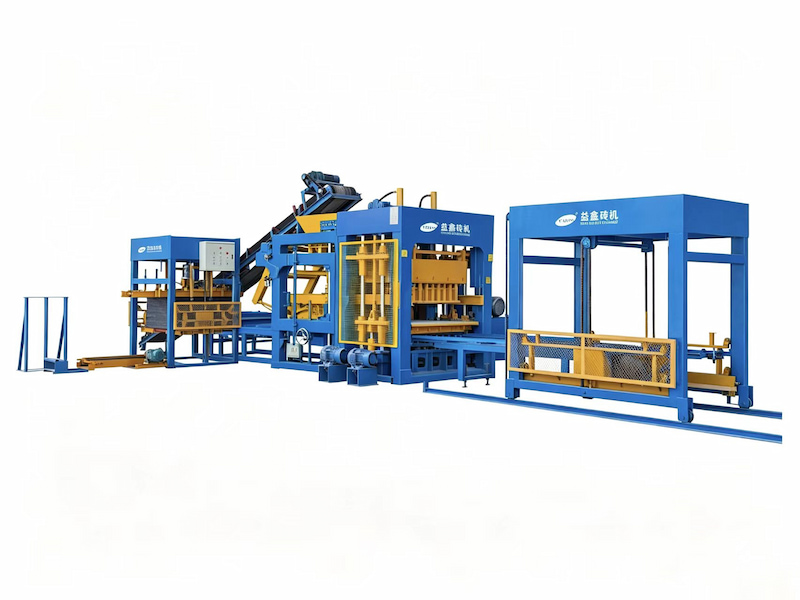
  • Servo Hydraulics and Servo Vibration: Forging the
    Servo Hydraulics and Servo Vibration: Forging the "Dual-Core" Competitiveness of High-End Brick Making Equipment
    Aug 31, 2026
    In the building materials machinery industry, brick making equipment is undergoing a profound technological revolution. Traditional brick making machines have long been plagued by high energy consumption, low efficiency, and uneven product density. The introduction of servo control technology is fundamentally rewriting the rules of the game. If the machine structure and mold precision of a brick making machine are its "body," then **servo hydraulics and servo vibration systems are the "intelligent heart" and "power core" driving its efficient operation.** Together, they form a technological barrier that is difficult for current high-end brick making machines to replicate.   Servo Hydraulics: From "Brute Force" to "Precision Guidance" Traditional brick making machines often use fixed-displacement pumps or variable-displacement pumps combined with solenoid valves. Like a strong man who only uses brute force, the motor always runs at full speed regardless of demand, wasting a large amount of energy as heat during standby and overflow. Statistics show that the effective power of traditional hydraulic systems in a complete brick making cycle is often less than 50%.   The innovation of the servo hydraulic system lies in replacing the traditional asynchronous motor with a combination of a servo motor and a gear pump. Its core logic is "on-demand oil supply": the controller precisely adjusts the speed and torque of the servo motor according to the real-time pressure and flow requirements of each stage of the process (such as material feeding, pressing, and demolding). This achieves breakthroughs in two dimensions:   Firstly, a revolutionary improvement in energy efficiency. In actual production, equipment using a servo electro-hydraulic control system can save more than 30% energy compared to ordinary motors. Under the "dual carbon" target (carbon reduction and emission reduction), this has direct economic and environmental value for energy-intensive building material manufacturers.   Secondly, a qualitative leap in control precision.In the molding and pressing stage, traditional hydraulic systems, due to large pressure fluctuations, easily lead to uneven density in the brick blanks. The servo hydraulic system, through closed-loop control and in conjunction with pressure sensors, can control the pressure fluctuations within an extremely small range. This is crucial for producing high-value-added products such as high-strength paving bricks and imitation stone bricks—only with precise pressure can the porosity and micro-cracks inside the brick be minimized, and the strength and appearance quality reach the standards of high-end building materials.   Servo Vibration: Breaking the "Resonance Curse" and the "Synchronization Dilemma"   If hydraulic systems solve the problem of "power," then vibration systems solve the problems of "density" and "efficiency." During brick-making, materials need to be rearranged and compacted through high-frequency vibration within the mold box. Traditional variable frequency vibration motors have large inertia during start-up and shutdown, easily causing frame resonance, resulting in high noise levels, short equipment lifespan, and ineffective transmission of vibration energy to the material.   The core value of servo vibration lies in its speed and precision.Servo motors have millisecond-level response speeds, completing start-up and shutdown within 0.2-0.3 seconds. This means completely avoiding the resonance zone—extremely short start-up and shutdown times, and the vibration frequency quickly surpassing the frame's natural frequency, significantly improving equipment stability.   For high-end multi-axis vibration systems, "synchronization" is another technological high ground.For example, Qunfeng Machinery's third-generation patented servo vibrator uses four-axis servo drive and achieves "ultra-dynamic response" through an integrated motion controller, ensuring that the phase and speed of the four motors remain synchronized at all times. If the vibration axes are not synchronized, the excitation forces will cancel each other out or even generate harmful torque; **precise synchronization, on the other hand, allows the excitation forces to be vector-superimposed, resulting in maximized molding efficiency.Data shows that this advanced servo vibration system can reduce energy consumption by more than 12%, increase excitation efficiency by more than 10%, and increase vibration start-up speed by more than 20%.    Dual Strengths: Building a Competitive Moat for High-End Equipment When servo hydraulics and servo vibration are deeply integrated into a single control system, the combined effect is unmatched by traditional equipment.   In terms of production efficiency, the extremely short response time of the servo system compresses the molding cycle. Combined with precise phase control, the equipment can seamlessly switch production parameters for different brick types, achieving flexible production. In terms of product quality, the precise hydraulic pressing and efficient servo vibration work together to result in higher brick density and less cement usage, producing higher-strength products from the same raw materials.   More importantly, this constitutes a technological ecosystem that is difficult to imitate.A mature servo control system cannot be achieved simply by purchasing servo motors and drivers. It requires equipment manufacturers to possess deep expertise in underlying algorithms (such as vibration phase synchronization algorithms and pressure closed-loop PID algorithms), system integration (matching hydraulic pipeline layout with electrical control strategies), and process databases (servo parameter combinations for different materials and brick types). Leading companies such as Quanzhou Machinery, Qunfeng Machinery, and Sanlian Machinery have all developed their own core patented technologies in the servo control field, which is the foundation for their ability to compete with established European and American manufacturers in the global market.         Conclusion It is foreseeable that future competition in the brick-making industry will no longer be a simple contest of steel thickness or mold precision, but rather a competition of depth understanding of the underlying technologies and processes of electro-hydraulic servo control. Whoever can make servo hydraulics better "understand" pressing force, and whoever can make servo vibration better "understand" material density, will gain a commanding position in the high-end brick-making market. Servo hydraulics and servo vibration are the "dual-core" keys to unlocking this future.For more product details, please visit https://www.yxbrickequipment.com
    Read More
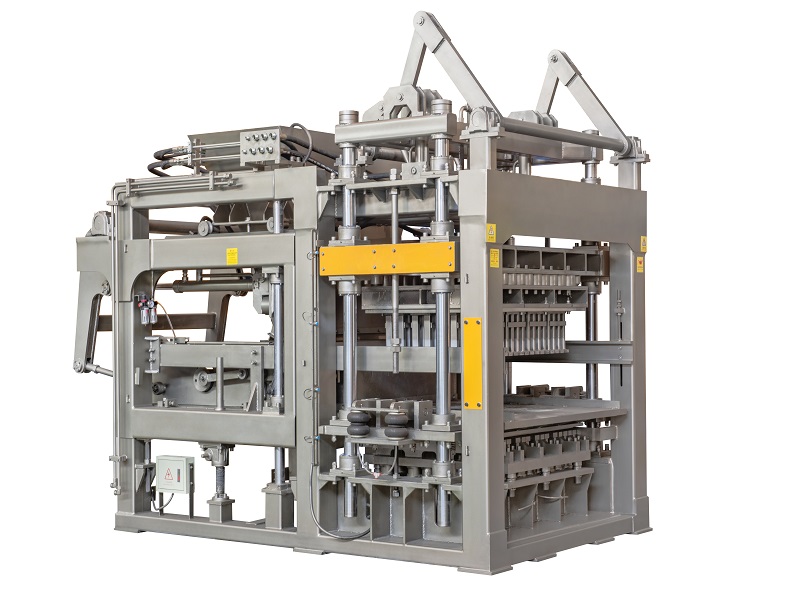
1 2 3 4

Request A Quote

If you are interested in our products and want to know more details,please leave a message here,we will reply you as soon as we can.
GET IN TOUCH
Contact Us
Feel free to contact us for any inquiries!

If you are looking for reliable concrete block making machines, customized block molds, or complete supporting equipment for block production, please feel free to contact us! Our professional team will provide you with targeted solutions to help your business develop efficiently.

Serving the world

Phone :+86-595-22963811

WhatsApp : +8615060951121

Email: yx05@blockmachine.cc

leave a message

leave a message
If you are interested in our products and want to know more details,please leave a message here,we will reply you as soon as we can.
submit
Contact Us : yx05@blockmachine.cc

Home

Products

whatsApp

contact