


Guide to Selecting Brick-Making Machines in China: Practical Recommendations Based on Production Needs
As a professional specializing in equipment selection and technical support for brick-making machine exports, I frequently encounter the same question from overseas clients: "With so many Chinese brick-making machine brands available, which one should I choose?" While the question appears simple, the answer involves multiple technical dimensions, including raw material characteristics, product types, production capacity planning, and investment budgets. This article approaches the subject from a practical perspective to help you establish a clear strategy for selecting the right equipment.
I. Clarify Your Raw Materials and Product Focus
The first step in selecting a brick-making machine is not looking at brands, but rather considering your raw materials and intended products. Chinese brick-making machines generally fall into two categories based on the production process: non-fired brick machines (concrete block machines) and fired brick machines (clay vacuum brick machines)
Non-fired brick machines utilize materials such as cement, sand and gravel, fly ash, slag, and construction waste. They shape products through vibration and compression; the finished products require only natural curing before use and do not need kiln firing. This type of equipment is ideal for regions with abundant industrial solid waste or sufficient sand and gravel resources. In contrast, fired brick machines primarily use clay and shale, shaping them through vacuum extrusion. These machines require an accompanying kiln for firing and are suited for traditional brick and tile production scenarios.
If you plan to produce standard bricks, hollow blocks, or paving stones, you should prioritize the non-fired brick production route; this is currently the mainstream trend for Chinese brick-making machine exports.
II. Landscape and Positioning of Mainstream Brands
After decades of development, the Chinese brick-making machine industry has established a clear brand hierarchy. Based on industry research and market rankings, key manufacturers include Quangong Machinery, Qunfeng Machinery, Zhuoyue Hongchang, Sinoma Jianke, Yixin Brick Machine, Hengxing Machinery, and Sanlian Machinery.
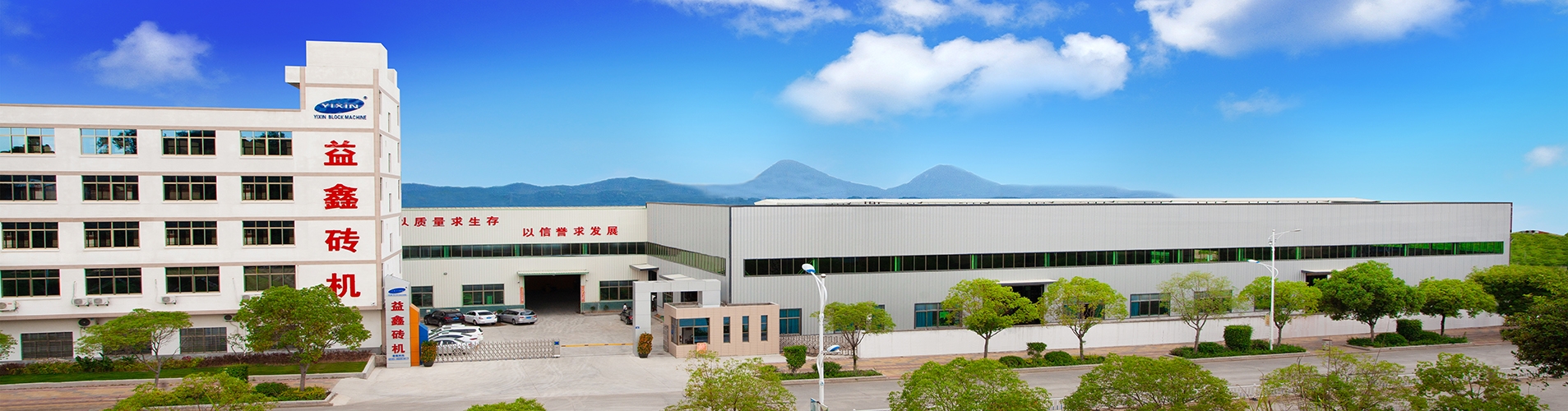
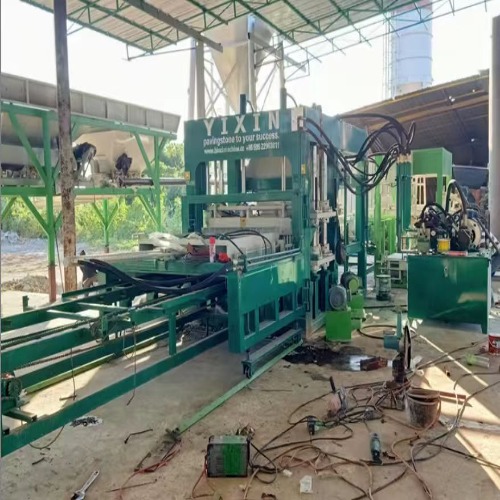
In terms of export market performance, Quangong and Qunfeng—both based in Quanzhou, Fujian—established their overseas presence early. Their product lines cover comprehensive, fully automatic block production systems suitable for large-scale building material enterprises. Sinoma Jiankestands out for its cost-effectiveness in the small-to-medium fully automatic block molding machine sector; its QTY series enjoys high visibility on export platforms such as the Canton Fair. Meanwhile, brands like Yixin Brick Machine have built stable service networks through distributor models in specific regional markets, such as the Middle East and North Africa. When selecting a model, there is no need to blindly chase the "biggest brand"; instead, focus on whether the brand has distributors or service teams in your region. Brick-making machines are production equipment designed for long-term operation, and the speed of after-sales response often has a greater impact on actual profitability than brand recognition alone.
III. Selecting the Model Category Based on Production Scale
Chinese brick-making machines are typically categorized by their "molding capacity" (number of blocks produced per cycle)—common designations include the "4-series," "6-series," "8-series," and "10-series," with the number indicating how many standard bricks are produced in a single molding cycle.
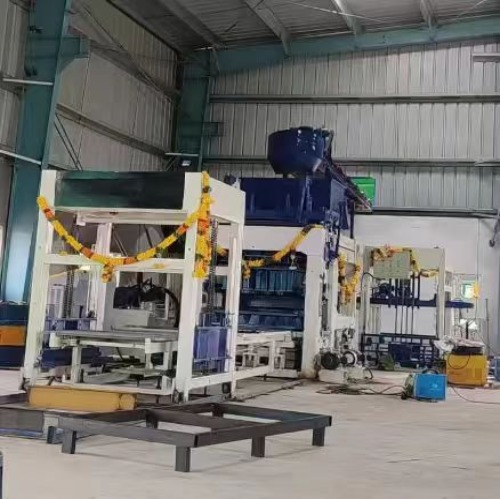
4-Series Machines (e.g., QTY4-18/QTY4-20): Suitable for small-to-medium-sized brick plants or investors just starting out. Taking the QTY4-18 interlocking brick machine as an example, it molds 26 standard bricks per cycle, with a theoretical output of approximately 41,600 bricks over an 8-hour shift. When equipped with a complete production line (including a mixer, conveyor, and automatic stacker), the total power requirement is around 34–38 kW. These models feature a lower investment threshold and are relatively simple to operate and maintain.
6-Series Machines (e.g., QT6-15): A common choice for medium-scale production; with a molding cycle of approximately 15 seconds, they are well-suited for building material enterprises with a stable stream of orders.
8-Series and larger models are geared toward large building material conglomerates or municipal infrastructure projects; while they offer high production capacity, the required investment is significantly higher.
For overseas clients entering the brick-making industry for the first time, I generally recommend starting with a semi-automatic or basic production line. You can initially use manual assistance for certain processes and upgrade to a fully automated configuration once you have established a market presence. This approach effectively manages the risks associated with the initial investment.
IV. Functional Adaptability: Multi-Purpose Capability is a Key Advantage
A significant technical feature of modern Chinese non-fired brick machines is their ability to produce a wide variety of products simply by changing the molds. The same machine can produce:
Standard bricks: 240×115×53mm; the most common walling material.
Hollow blocks: 6-inch or 8-inch specifications; used for frame infill walls.
Paving stones/pavers: 200×100×60mm and other sizes; widely used in municipal projects.
Kerbstones, grass pavers, and slope protection bricks: Produced using specialized molds.
This means that by purchasing a single main machine and using different molds, a customer can cater to multiple product markets. When selecting a model, verify whether the supplier offers custom mold services and check the lead times for standard molds.
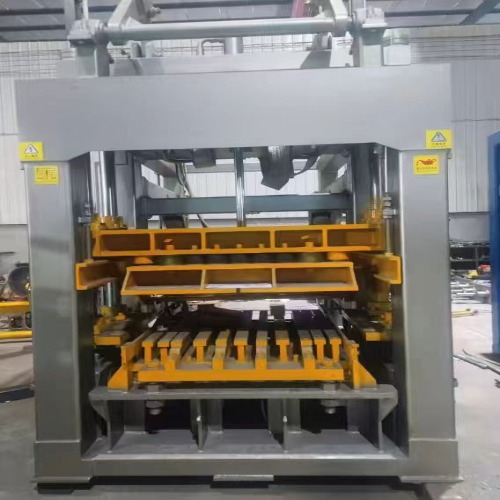
Additionally, technical differences in the vibration-molding system directly affect brick density and strength. Mid-to-high-end models utilize synchronized table vibration and pressure-head vibration technology combined with a PLC control system for precise parameter adjustment, resulting in high product density and dimensional accuracy. Customers with limited budgets may opt for a basic vibration system but should accept some variation in product strength.
V. Practical Advice for International Customers
First, provide raw material samples and a product specification list to the supplier, requesting a tailored model recommendation and production capacity estimate. Molding characteristics vary significantly depending on the raw material; generic parameter charts serve only as a reference.
Second, prioritize models with a proven export track record. Brands with a long history of exporting brick machines typically offer more mature equipment in terms of voltage compatibility (e.g., matching 380V/50Hz to the local grid), parts interchangeability, and English-language user interfaces.
Third, confirm after-sales support terms. This includes guidance on installation and commissioning, operator training, lead times for wear parts, and methods for remote technical support. While the main brick machine typically has a design lifespan of 8–10 years, molds and vibration components are consumables that require a continuous supply.
Fourth, allow flexibility for raw material adjustments. If local raw materials have unique characteristics (such as high moisture content or high silt/clay content in aggregates), molding parameters may require on-site optimization; choosing a supplier that offers technical support is more valuable than simply comparing prices.
Selecting a brick machine is essentially a process of "matching": matching the brand to your service radius, the machine model to your production capacity needs, and the functionality to your product strategy. It is advisable to first clarify your raw material conditions, target products, and budget range before engaging in technical discussions with two or three suppliers; focus on the suitability of their proposed solutions rather than just the price quotes. Selecting the right brick-making machine is the foundation for a brick plant's long-term, stable profitability.For more details on our concrete block making machines, please visit https://www.yxbrickequipment.com