



PLC Control in Block Making Machines: How Automation Improves Consistency
Quick Answer
PLC (Programmable Logic Controller) control systems are revolutionizing block making by replacing manual operations with precise, automated sequences that dramatically improve product consistency. Research shows that PLC-based automation can reduce cycle time by 15.4% and increase production by 300 pieces per hour compared to manually operated machines. By standardizing mix ratios, vibration parameters, and pressing pressure, PLC systems eliminate human error, ensuring uniform density, dimensional accuracy, and compressive strength across every batch . Modern PLC systems with touchscreen interfaces also enable real-time monitoring, fault diagnosis, and recipe storage for different block types, making them essential for block plants seeking quality consistency and operational efficiency.
1. User Search Intent Analysis
Who Is Searching and Why?
| Audience | Primary Intent | Key Concerns |
| Production Managers | Operational/Decision | How automation reduces defects and improves output consistency |
| Engineers | Technical/Informational | PLC programming, system integration, control logic |
| Plant Owners | Commercial/ROI | Cost-benefit analysis, payback period, labor savings |
| Quality Control Staff | Informational/Procedural | How PLCs ensure batch-to-batch uniformity |
Search Intent Categories Informational: Understanding PLC functions, automation benefits, and implementation Commercial: Evaluating automation investment, comparing PLC vs. manual systems Technical: Learning about control logic, sensors, and system integration Problem-solving: Addressing quality inconsistency, human error, and productivity issues.
2. Key User Questions
Quality & Consistency Questions
"How does PLC control improve block quality?" — Standardizes mix ratios, pressure, and vibration to reduce human error "Can PLC systems reduce defect rates?" — Yes, PLC-based interlock systems have shown to reduce product failure rates by 13% "How does automation affect block density and strength?" — Uniform compaction produces higher compressive strength and better surface finish.
Technical Questions
"What does a PLC system in a block machine consist of?" — PLC controller, sensors, hydraulic actuators, HMI touchscreen, and programming software "How are PLCs programmed for block machines?" — Using ladder logic, structured text, or function blocks conforming to IEC 61131-3 standards "Can PLCs handle different block types?" — Yes, recipe storage allows one-touch switching between hollow blocks, solid bricks, pavers, and curbstones.
Operational Questions
"How much can PLC automation increase production?" — Studies show cycle time reduction of 15.4% and production increase of 300 pcs/hour "What maintenance is required for PLC systems?" — Regular checks on electrical connections, sensor calibration, and software updates "Is operator training difficult?" — Modern systems feature user-friendly HMI interfaces requiring minimal technical expertise.
3. How PLC Control Works in Block Making
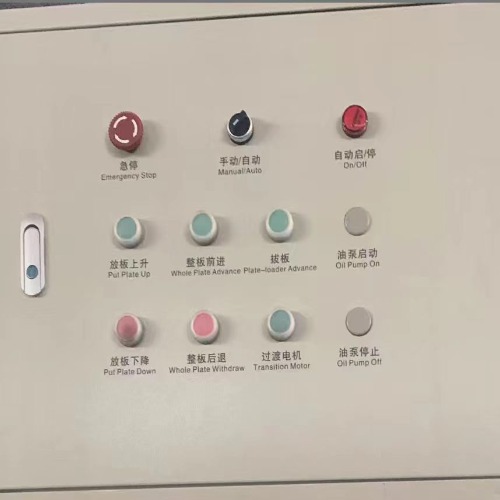
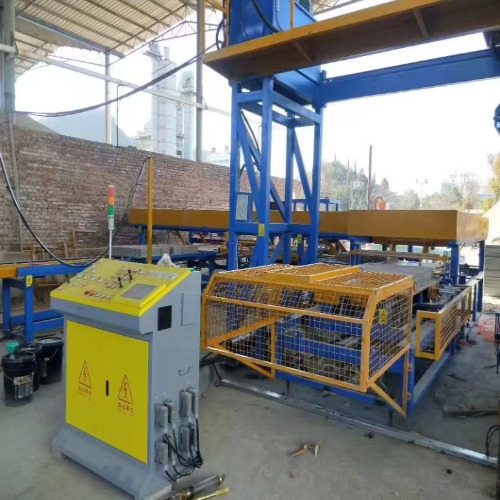
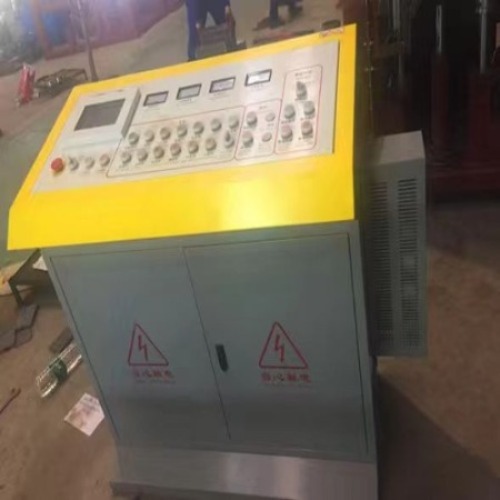
The Automation Architecture A PLC-based control system in a block making machine integrates multiple subsystems through a central processing unit : The PLC Controller serves as the system's brain, executing programmed logic that coordinates all production steps. Conforming to IEC 61131-3 standards, modern PLCs allow engineers to create reusable function blocks that increase programming efficiency and reliability . Sensors and Inputs monitor critical parameters: material levels, hydraulic pressure, temperature, vibration frequency, and mold position. Real-time feedback enables dynamic adjustments during each production cycle . Actuators and Outputs translate control signals into mechanical actions: hydraulic press movement, vibration activation, material feeding, and block ejection. High-precision components like proportional valves ensure accurate control . Human-Machine Interface provides operators with a touchscreen panel for monitoring, parameter adjustment, recipe selection, and fault diagnosis. This reduces reliance on operator experience and ensures repeatability . The Production Cycle Under PLC Control From raw material to finished block, the PLC manages each step with precision : Batching: PLC controls weighing systems to ensure accurate material proportions Mixing: Timing and mixing intensity regulated for consistent concrete Molding: PLC coordinates vibration frequency, amplitude, and pressing pressure Ejection: Demolding sequences synchronized for damage-free removal Stacking: Automatic palletizing and stacking controlled by the PLC.
4. How PLC Control Improves Consistency
Elimination of Human Error Manual machines rely on operator judgment for mix ratios, vibration duration, and pressure application—variables that naturally fluctuate. PLC systems eliminate this variability by executing the same precise sequence every cycle . Research confirms that conventional paving block machines are "prone to human error and being less consistent" . PLC automation directly addresses this by standardizing the entire production process . Standardized Parameters PLC control ensures that every block experiences identical: Mix proportions: ±1% accuracy in material dosing Vibration intensity: Uniform frequency and amplitude per cycle Pressing force: Consistent hydraulic pressure application Cycle timing: Repeatable filling, compaction, and ejection sequences This standardization results in uniform density, dimensional accuracy, and compressive strength across all production . Real-Time Quality Monitoring Modern smart control systems incorporate feedback loops that adjust parameters dynamically based on real-time data . When deviations in cycle time or energy consumption occur, the system can detect and correct them instantly, often before operators are aware of the issue . This predictive capability enables: Immediate detection of quality deviations Automatic parameter correction Prevention of defective batches Reduced material waste.
5. Measurable Benefits of PLC Automation
Productivity Gains Research on PLC-modified paving block machines shows concrete results: cycle time decreased by 15.4%, leading to production increases of 300 pieces per hour compared to manual operation . Quality Improvement PLC-based control systems have demonstrated defect reduction of 13% through precise interlock programming . Fully automatic PLC-controlled machines maintain defect rates below 1%, compared to 2-3% for manual operations . Operational Efficiency Labor reduction: Fully automatic systems require only 3-5 workers vs. 8-12 for manual lines Energy savings: Optimized cycles reduce power consumption Waste reduction: Precise batching minimizes material waste Consistency: Uniform quality across all production batches.
6. Implementation Considerations
Initial Investment PLC-controlled block machines require higher upfront investment compared to conventional systems. However, the ROI is achieved through reduced labor costs, lower defect rates, and higher production capacity . Studies indicate that fully automatic lines often recover investment in 6-10 months. Training Requirements Modern PLC systems feature user-friendly HMI interfaces, allowing operators to manage complex processes with minimal technical expertise . However, maintenance staff require technical training for PLC programming and troubleshooting . Mold Compatibility Even the most advanced PLC system requires high-quality molds to achieve consistency . Molds should be heat-treated for wear resistance and designed for accurate fitting, smooth demolding, and consistent block geometry .
7. Future Trends: Smart Control in Block Manufacturing
The evolution of PLC control is moving toward fully integrated smart manufacturing systems : Predictive Maintenance: Systems that identify inefficiencies and implement corrective measures proactively Remote Monitoring: Cloud-based access to production data IIoT Integration: Connecting machines to enterprise systems for real-time optimization Self-Optimization: Systems that adjust parameters autonomously based on material behavior As one industry expert notes, smart control "transforms machines into responsive systems, production lines into intelligent networks, and manufacturing itself into a continuously evolving discipline" .
8. FAQ
1. What is a PLC in a block making machine?
A Programmable Logic Controller (PLC) is an industrial computer that automates the block production process. It controls batching, mixing, molding, and stacking through programmed logic, replacing manual operation and relay-based control .
2. How does PLC control improve block quality?
PLC systems standardize mix ratios, vibration parameters, and pressing pressure, eliminating human error. Research shows PLC automation can reduce defect rates by up to 13% and ensure uniform density and strength across all batches .
3. What production improvements can I expect with PLC automation?
Studies demonstrate 15.4% cycle time reduction and production increases of 300 pieces per hour compared to manual operation . Fully automatic PLC lines can achieve 10,000+ blocks per shift with only 3-5 workers.
4. Is PLC control suitable for small block plants?
Yes. Scalable PLC systems can be implemented in various production environments, offering efficiency gains regardless of plant size . Semi-automatic configurations with basic PLC control are available for lower-volume operations.
5. How difficult is it to operate a PLC-controlled block machine?
Modern systems feature user-friendly touchscreen interfaces that allow operators to monitor and adjust production with minimal technical expertise . However, maintenance staff require technical training for system diagnostics and programming .
6. Can a PLC system handle different block types?
Yes. PLCs store recipes for different block types—hollow blocks, solid bricks, pavers, and curbstones—allowing one-touch switching between products .
7. What maintenance is required for PLC control systems?
Regular checks on electrical connections, sensor calibration, and software updates are essential. Worn components should be replaced according to inspection results and working hours .
If you want to get more information about our products, you can click www.yxbrickequipment.com