



How to Choose the Right Fully Automatic Brick Making Machine for Beginners
I am a professional specializing in brick making machine supply and technical services. Over the years, I have witnessed countless clients go from "wanting to enter the industry" to "achieving success." In this process, I have deeply realized that choosing the right first brick making machine is far more important than choosing an expensive one.
Today, I want to talk from your perspective about the most realistic needs of beginners, the most common pitfalls they encounter, and how to scientifically choose a fully automatic brick making machine that suits their needs.
I. Expert Advice for Beginners:
1. Research the local brick production market, attend relevant exhibitions or visit industry peers to determine your production direction and needs.
2. Study local environmental policies, choose a suitable production base, and consider land use and raw material issues to ensure compliance with production policies.
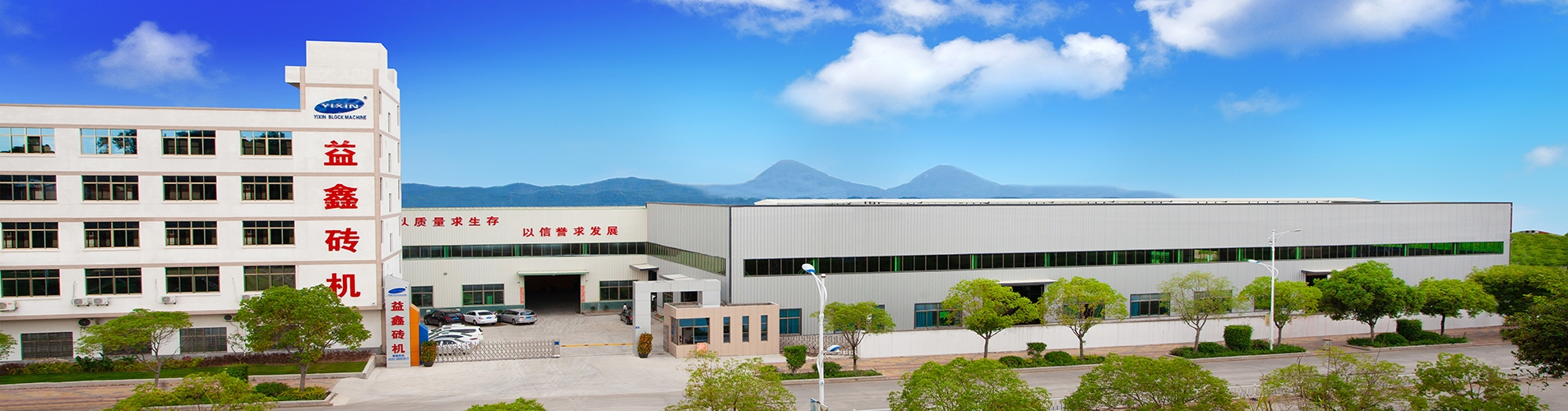
3. Choose a reliable machinery manufacturer with professional technical support. Inspect their workshops and machine production facilities. If convenient, inquire about customer reviews of their brand's machines.
4. After having a clear plan for your machine purchase, estimate budgets for product purchases, maintenance, energy consumption, material preparation, and personnel training costs to calculate subsequent cash flow and profit recovery.
II. Core Needs of Different Customer Groups
New Entrepreneurs: Limited budget, aiming to control initial investment. Prioritize cost-effective, low-barrier-to-entry models to avoid blindly incurring high prices.
Easy to operate, with automation levels suitable for beginners, requiring no complex technical expertise for quick start-up and production. Highly adaptable to raw materials, it can flexibly handle common solid waste raw materials such as fly ash, slag, and stone powder, reducing raw material procurement costs.
Low maintenance costs, low equipment failure rate, and timely after-sales support prevent prolonged production stoppages and losses due to lack of operational knowledge.
Compliance compliant, meeting local environmental production requirements and successfully passing relevant production qualification audits.
For construction projects with clear production capacity needs: Production capacity matches project schedules; the equipment's stable output precisely matches the brick supply rhythm of the project, avoiding supply disruptions that slow down the construction period.
Highly adaptable to brick types, allowing for quick mold changes and simultaneous production of various prefabricated components required for projects, such as permeable bricks, curb stones, and slope protection bricks.
Fully automated process, it can integrate with existing production lines to achieve closed-loop production from material preparation to stacking, reducing on-site manpower.
High long-term operational stability, supporting 24-hour continuous operation, adaptable to the high-intensity production demands of projects with tight deadlines.
Controllable energy consumption, controlling the energy consumption of producing a single brick, reducing the overall building material costs of the project.
III. Common Problems and Misconceptions Faced by Beginners
Misconception 1: "The bigger and more comprehensive, the better"
Many customers believe that buying a "multi-purpose machine" can handle any type of brick, solving all problems at once. However, the reality is: the more complex the equipment, the higher the operational threshold, the more potential for failure, and the greater the maintenance costs. For beginners, I recommend choosing a model with appropriate functions, strong focus, and ease of operation. Master one product category first, then gradually expand the product line.
Misconception 2: "Only looking at the price, not the overall cost"
A lower equipment price might be 100,000 less, but if it consumes 50 kWh more electricity per day, requires two more mold replacements per year, and needs two more workers per shift, the overall cost will be higher over the year. When purchasing equipment, you should calculate the "overall cost per brick," not the "base price of the equipment."
Myth 3: "Ignoring Site and Foundation Conditions"
Fully automatic brick machines require:
Sufficient factory space (including raw material area, production area, curing area, and finished product storage area)
A stable three-phase power supply and sufficient load capacity
A sturdy equipment foundation (some large machines require reinforced concrete foundations).
Some customers have purchased equipment and only discovered upon arrival that the factory height was insufficient for crane installation, or that the power supply capacity was inadequate and needed to be upgraded, not only increasing costs but also delaying production.
Myth 4: "Emphasis on Equipment, Neglect of Molds"
Molds are the heart of a brick machine. The same machine equipped with ordinary domestic molds versus imported alloy steel molds will produce bricks with significant differences in dimensional accuracy, surface smoothness, and demolding ease. Good molds may cost 2-3 times more than ordinary molds, but their lifespan is 5-8 times longer, resulting in a lower overall cost. New operators often try to save money on this, resulting in unstable brick dimensions, difficult demolding, and a high scrap rate, ultimately leading to losses. Myth 5: "I think I can make money immediately after buying the equipment." Brick making is a systematic project: raw material procurement → formula testing → production and molding → curing → packaging and stacking → sales and payment collection, with a cycle of at least 7-28 days (depending on the curing method). Newcomers need to prepare for a 1-3 month "break-in period," including equipment debugging, worker training, formula testing, and market development. Blindly pursuing "install today, produce bricks tomorrow, and make money the day after" is unrealistic.
--
IV. Conclusion: Choosing a brick machine is more than just choosing equipment.
As someone working in the brick machine supply industry, I want to tell every customer: you are not just choosing a machine, but a long-term partner. Equipment will age and break down, but a responsible supplier will be there for you when you need it.
Brick making is an industry that is both traditional and full of opportunities. With the continuous advancement of infrastructure construction, the deepening of beautiful rural construction, and the implementation of green building materials policies, the market demand for high-quality bricks will only continue to grow. If you are just entering this industry, please remember: take small steps, but take steady steps. Choosing the right starting point is more important than running fast.
If you're currently in the product selection phase, feel free to contact me with your product plans and market insights. A good piece of equipment deserves our help to start by understanding your true needs.If you want to get more information about our products,you can click https://www.yxbrickequipment.com